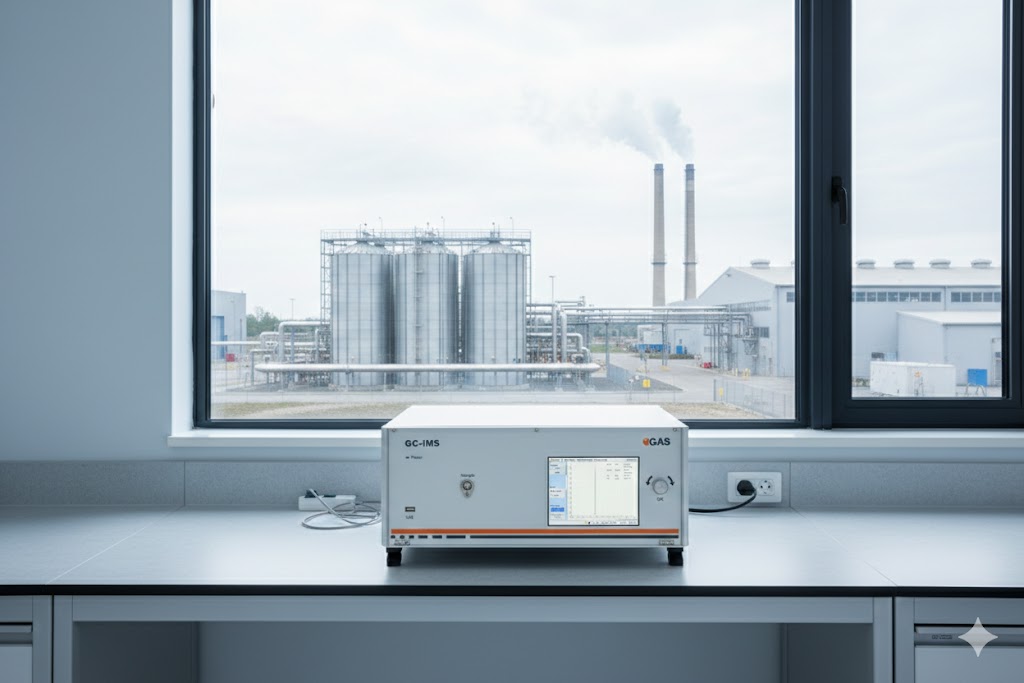
Sponsored Content
GC-IMS is no longer “just” an interesting technique for odour work – it is becoming the reference backbone for serious, defensible environmental odour analysis. Around the world, leading labs and consultants are quietly adding it to their toolbox and discovering how much more robust, fast and objective their odour assessments can become. GC-IMS (Gas Chromatography – Ion Mobility Spectrometry) delivers 2D separation, sub‑ppbv sensitivity and rugged, portable hardware that goes where the odour problem really is: at the stack, on the boundary, in the plant. With IMS operating at ambient pressure using a Tritium beta source (IAEA/EURATOM exempt, no licence required) and water-based reagent ions, you avoid vacuum systems, fragmentation and the associated dilution effects, while still obtaining direct, high‑quality VOC fingerprints you can correlate with sensory data.
For years, odour units have been accepted but often questioned by operators, regulators and neighbours because they lack chemical transparency. GC-IMS changes that equation by measuring real VOC fingerprints in gas samples at sub‑ppm level with orthogonal GC+IMS separation, providing high selectivity across a wide range of volatiles. The instruments are compact and rugged, can be integrated in mobile labs or vans with an on‑board nitrogen generator, and need only mains power on‑site. Instead of discussing “odour annoyance” in abstract terms, you can present two‑dimensional plots, peaks and fingerprints that clearly differentiate sources and operating conditions.
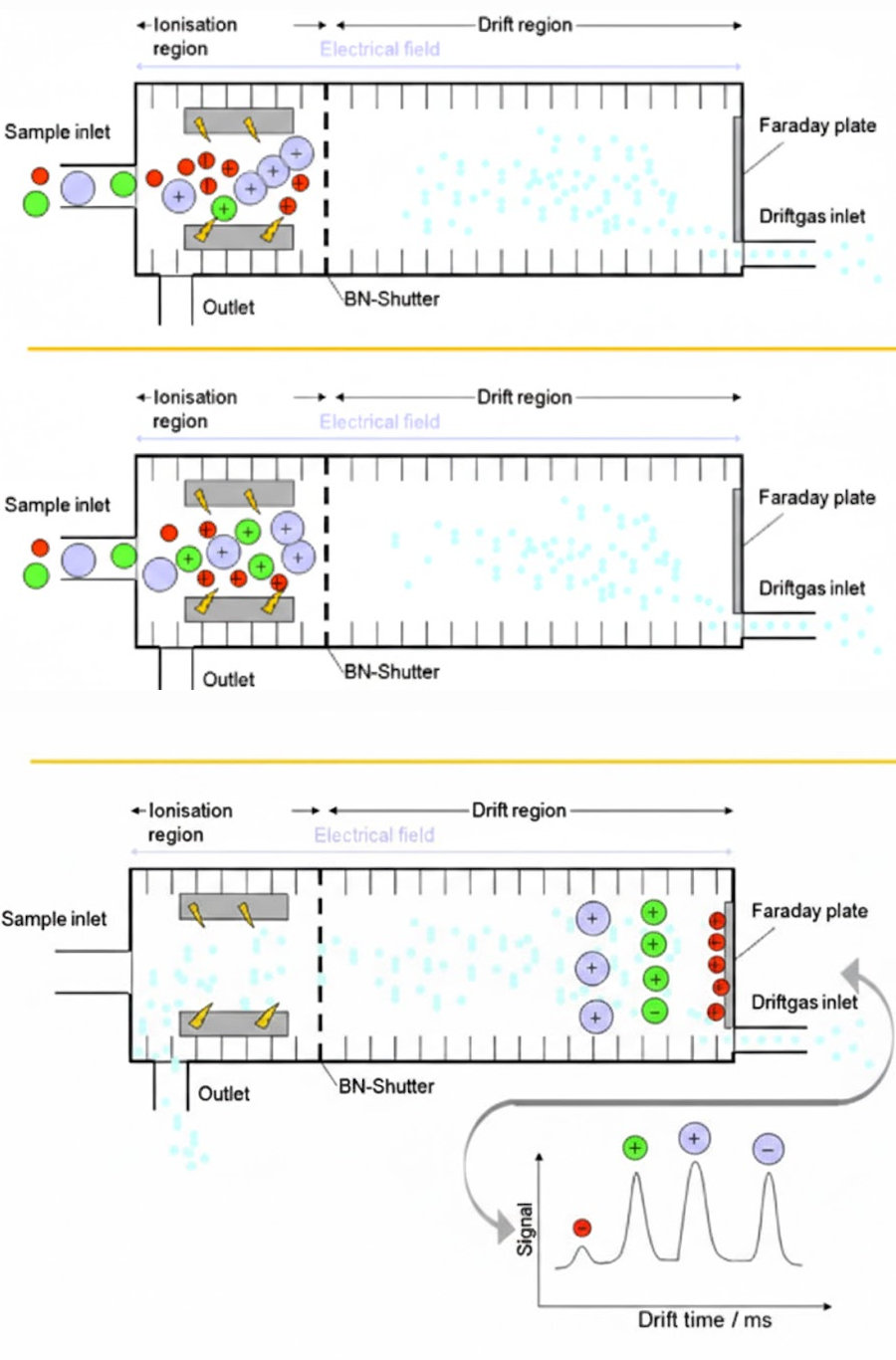
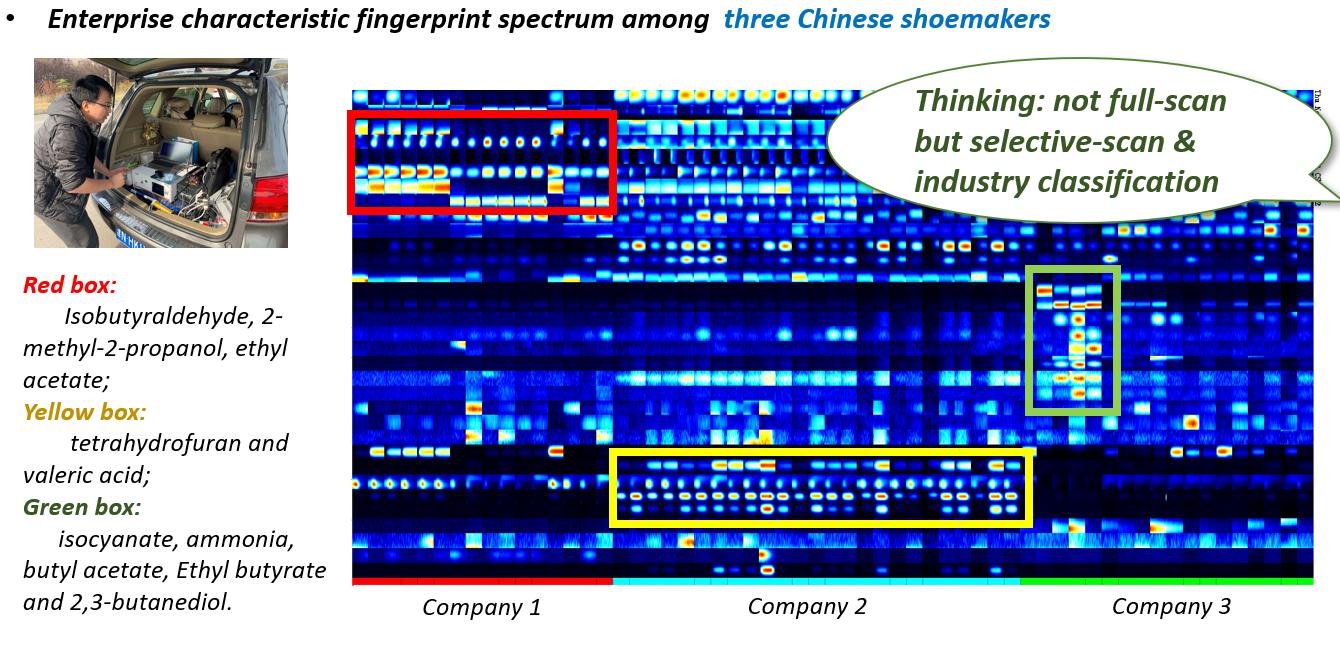
This is not speculative technology. At wastewater treatment plants, Vera, Companioni, Meacham and Gygax demonstrated real‑time VOC and odour monitoring directly with GC-IMS, showing that different locations in the plant generate distinct 2D fingerprints that make source attribution straightforward. Their conclusion was clear: GC-IMS has the potential to act as an improved electronic nose, without sensor drift, with outstanding sensitivity and customizable analysis times, and is therefore ideal for on‑site monitoring of off‑flavour inducing volatiles. Building on this work, GC-IMS is now under evaluation at the Institute of Ecological and Environmental Sciences in Tianjin (China), with promising early results.
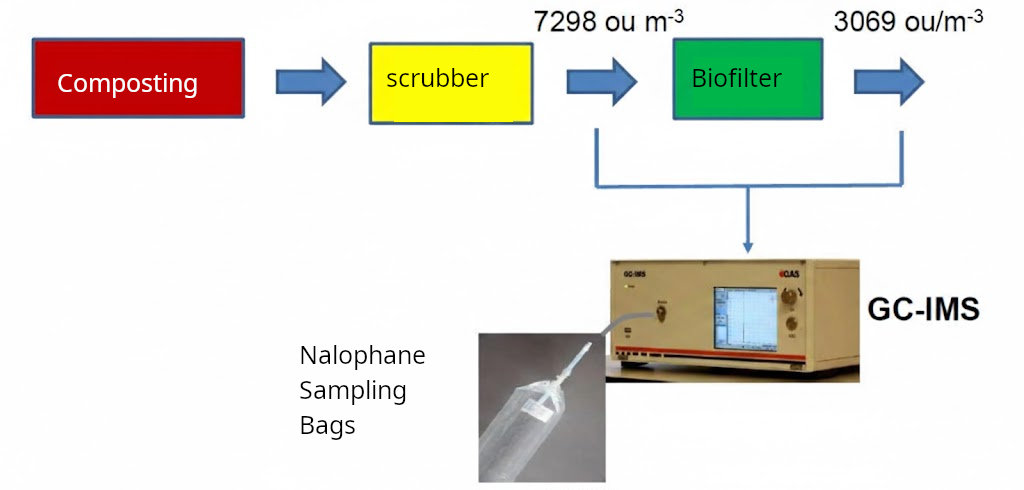
For many practitioners working under EN 13725:2022, dynamic olfactometry is not going away, nor should it; what is needed is a stronger analytical backbone. GC-IMS provides exactly that by complementing panel‑based measurements with robust chemical information. At Odournet (Barcelona), Companioni and colleagues have shown that GC-IMS can directly detect VOCs in Nalophan bags used for dynamic olfactometry, enabling objective evaluation of treatment performance (landfills, wastewater treatment plants, etc.) and a direct correlation between odour units and chemical patterns. The same instrumentation can characterise VOC background in bags before use and follow the natural loss of VOCs over time.
In 2023, technical staff at ARCO Solution (Trieste) went further by demonstrating in an internal, yet‑unreported study that GC-IMS achieves lower LOD and LOQ than dynamic olfactometry for typical off‑flavour compounds.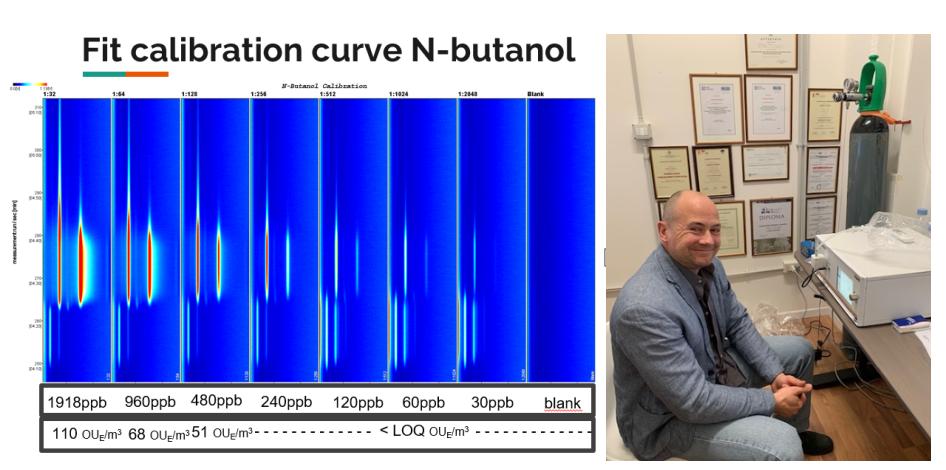
In practice, this means you can detect relevant changes in emissions earlier and in a more objective way, supporting process control, complaint management and regulatory dialogue. The same system also supports occupational safety by quantifying exposure‑relevant volatiles for sampling personnel, panellists and operators, as required by EN 13725:2022 section 9.5, instead of leaving exposure assessment to indirect indicators.
The value of GC-IMS is also being recognised at the level of standards and metrology. At ENEA in Portici (Naples), in work led by Dr. Ettore Massera, GC-IMS is being used for laboratory evaluation of electronic noses with gas mixtures in the framework of the forthcoming IEEE P2520.1 standard. In this context, GC-IMS acts as a robust, traceable reference system for e‑nose characterisation, giving developers and users a much stronger basis for comparing and validating sensor performance. For anyone planning to rely on e‑noses in regulatory, contractual or industrial contexts, GC-IMS provides the independent reference data that make those decisions defensible.
All of this would remain academic if the hardware were fragile, complex or confined to specialised labs. It is not. G.A.S. Gesellschaft für analytische Sensorsysteme mbH has spent years specialising in GC-IMS and now offers complete systems targeted to environmental and odour applications. Their GC-IMS platform combines high sensitivity down to low ppbv levels with orthogonal separation, fast analysis, and compact, rugged design suitable for mobile deployments with integrated nitrogen generation.
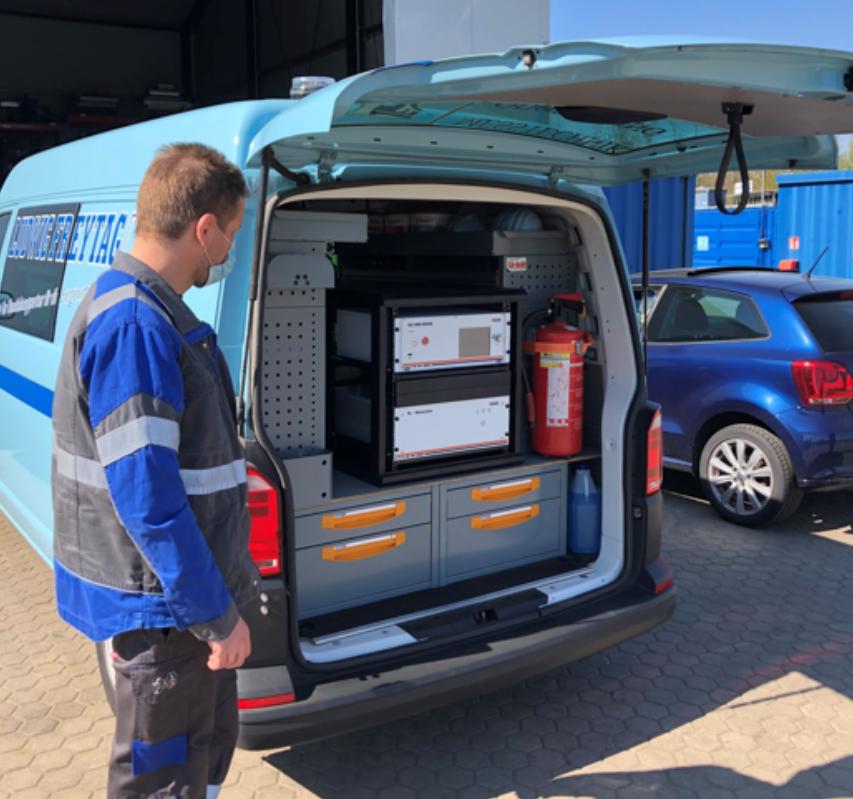
For consultants, laboratories and operators, this means you can integrate GC-IMS as a permanent “chemical eye” alongside dynamic olfactometry, deploy it in a van for campaigns around landfills, wastewater treatment plants or industrial sites, and document odour management with defensible, high‑resolution VOC fingerprints.
If your work goes around odours—whether designing treatment plants, auditing performance, advising regulators or managing complaints—this is the moment to move from “odour is just a unit” to “odour is traceable and optimisable”. GC-IMS is the technology that makes that transition real, and G.A.S. provides a mature, field‑proven implementation ready to be integrated into your workflows.
Offered by G.A.S. Gesellschaft für analytische Sensorsysteme mbH.