There is no translation available.
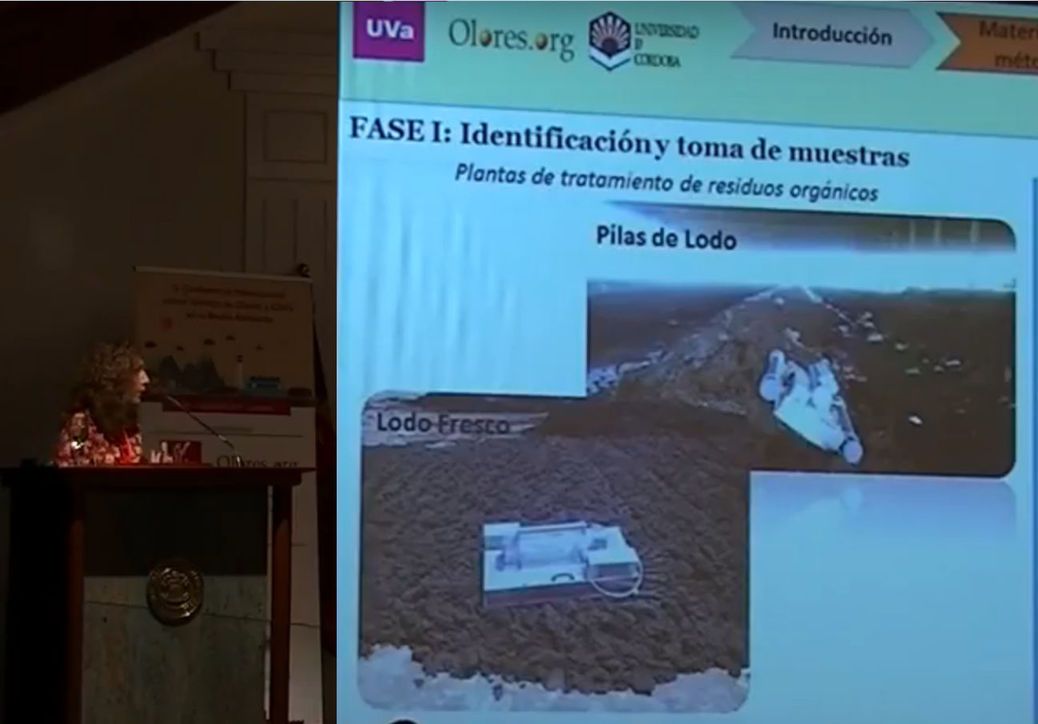 This study presents several results related to the odorous impact derived from organic waste treatment and management plants carried out by the research group. Different raw materials were selected to evaluate the odorous impact and its relationship with their physico-chemical characterization or operational variables. Statistical evaluation through Principal Component Analysis (PCA) groups the odor by its origin or raw material.
In addition, the analysis allows relating the odor with the operational variables, being the odor emission rate (OER, ouE/s) and dynamic respirometric index (DRI, mg O2/gVS·h) the most influential variables in sample variance. NIR technology has demonstrated to be a useful tool to differentiate the chemical composition of the substrates.
M. Toledo, M.C. Gutiérrez*, A.F. Chica, J.A. Siles, M.A. Martín
Universidad de Córdoba. Facultad de Ciencias. Departamento de Química Inorgánica e Ingeniería Química (Área de Ingeniería Química). Campus Universitario de Rabanales. Carretera N-IV, km 396, Edificio Marie Curie, 14071 Córdoba, Spain. *iq2masam@uco.es
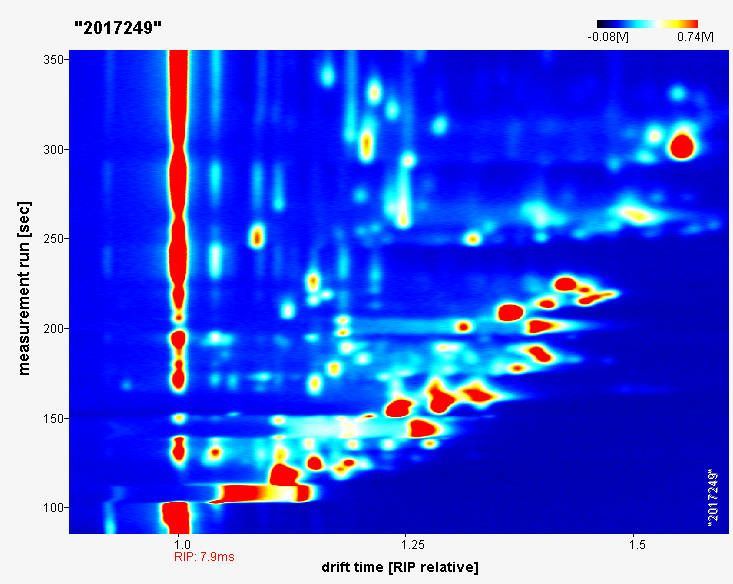 In this study, the application of the technique Gas Chromatography coupled to Ion Mobility Spectrometry (GC-IMS), for the detection of odorous volatile compounds in the indoor air of an urban waste treatment facilities, was evaluated.
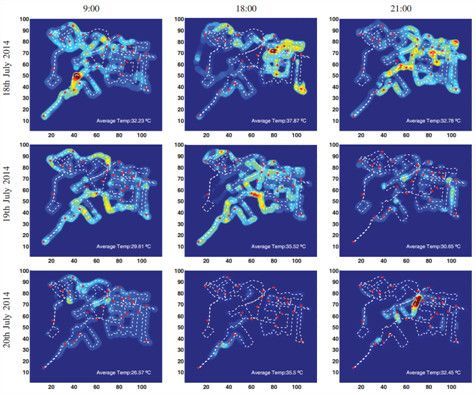 The SulfSCAN project presented in this article proposes a new approach to obtaining concentration maps by deploying a network of low cost olfactory sensors, and the development of atmospheric modeling tools to estimate the dispersion of odors in real time.