There is no translation available.

   This research explores using recycled by-products from wastewater treatment plants as packing materials in biotrickling filters (BTFs) for odour removal.

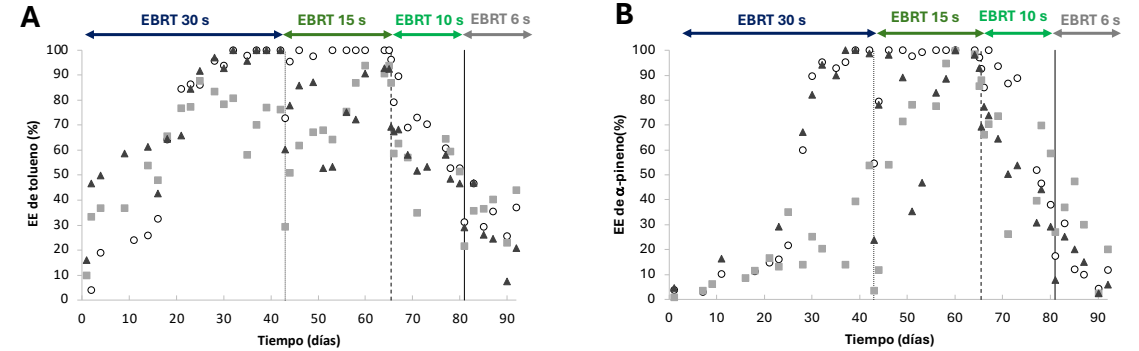
   Three materials-commercial Pall rings, recycled plastic bottle caps, and 3D-printed extruded recycled plastic carriers-were tested for treating gases containing H₂S, NH₃, and VOCs. Results showed 100% removal of H₂S and NH₃ at gas residence times up to 6 seconds, and over 90% VOC removal at longer residence times. The 3D-printed recycled plastic carrier achieved the best performance, including complete removal of toluene and α-pinene. The study confirms that recycled plastics from the water cycle can be effective, sustainable packing materials for BTFs in odour treatment..

S. Sáez-Orviz a-b, R. Lebrero a-b, L. Terrén c, S. Doñate c, M.D. Esclapez c, L. Saúco c, R. Muñoz a-b*

a Instituto de Procesos Sostenibles (ISP), Universidad de Valladolid, Mergelina s/n, 47011 Valladolid, Spain.
b Department of Chemical Engineering and Environmental Technology, School of Industrial Engineering, University of Valladolid, Dr. Mergelina, s/n, 47011 Valladolid, Spain.
b Depuración de Aguas del Mediterráneo (DAM), Av. Benjamín Franklin, 21, 46980 Paterna, Valencia, Spain.
* raul.munoz.torre@uva.es

There is no translation available.

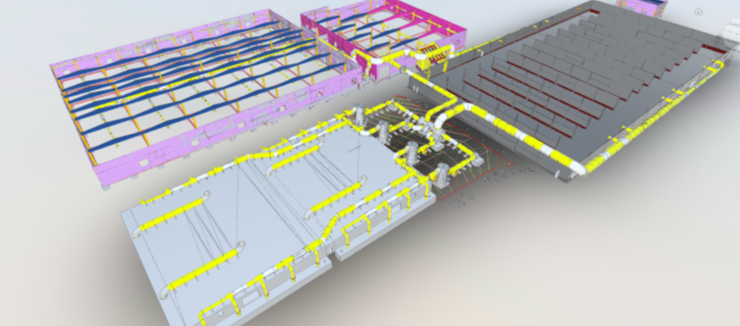
   The new Copero Advanced Composting Plant, launched by EMASESA in Seville, addresses two main challenges: recovering sludge from urban wastewater for agricultural use and significantly reducing odor emissions impacting local residents. 

   Through innovative operational controls and advanced monitoring systems, the facility ensures efficient composting while minimizing environmental and social impacts.

S. Romero, E. Toro & F.J. Busto

  Complejo Ambiental Copero. Dos Hermanas (Sevilla)

There is no translation available.

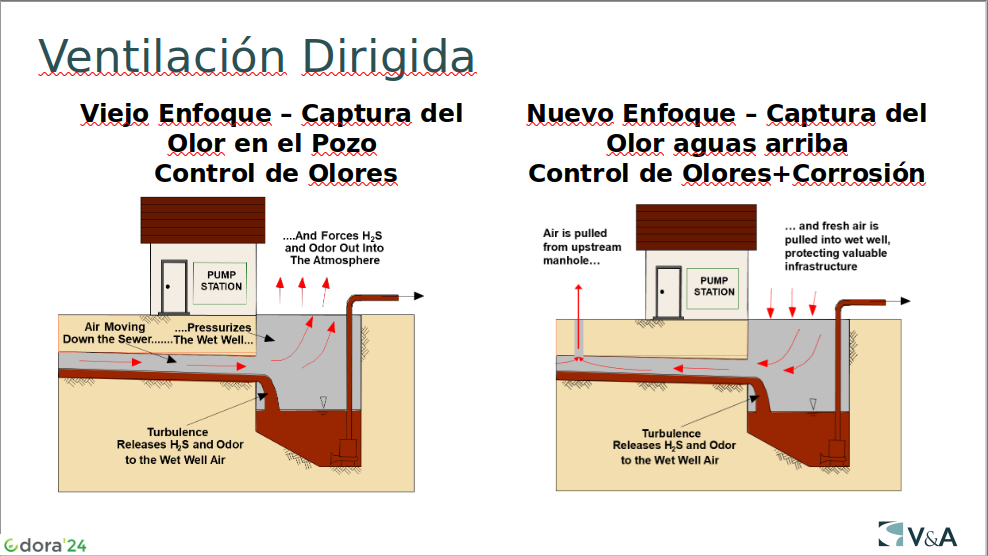
   The design of wastewater collection systems is crucial for efficient water reclamation, focusing not only on hydraulic performance but also on biological and chemical factors that impact water quality and infrastructure longevity.

   Addressing issues like corrosion, odors, and hazardous conditions in the design phase enhances sustainability and reduces costs. This paper explores key design strategies linked to Environmental, Social, and Governance (ESG) benefits, including limiting anaerobic conditions, reducing turbulence, enforcing pretreatment, and planning for system growth, supported by a case study demonstrating successful implementation.

A. Caicedo, V. Harshman.

V&A Consulting Engineers, Inc.
11000 Broadway, Suite 320, Oakland, California, USA. 

acaicedor@vaengineering.com

Plus d'articles...

All the content here under Creative Commons license