Scentroid has introduced several improvements to its SIMS3 platform, enhancing the accuracy of emission plume visualization, integrating new monitoring hardware, and refining analytical tools for more robust odour event assessment. These updates aim to provide more reliable representations of atmospheric dispersion patterns and improve data interpretation in environmental monitoring applications.
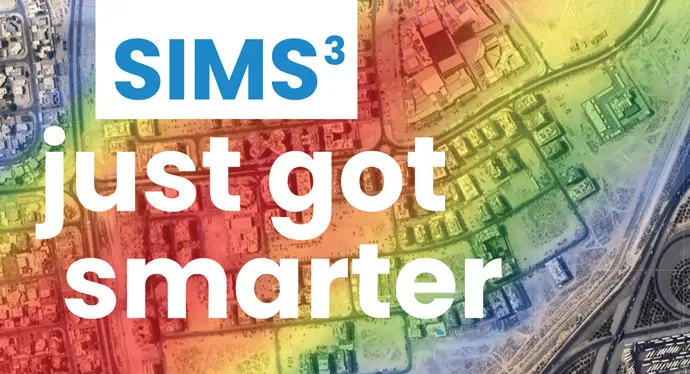
Recent developments in the Scentroid SIMS3 system focus on upgrading how emission plumes are modelled and displayed. The standard heatmap representation has been replaced by a custom visualization engine that ensures higher spatial resolution and stability at all zoom levels. This modification eliminates clustering effects common in dense measurement networks and provides better definition near emission sources, particularly under variable meteorological conditions. The result is a more consistent and realistic depiction of dispersion dynamics, improving the interpretation of odour and pollutant transport in complex environments.
One key addition is the inclusion of native support for the THP10, Scentroid’s new sewer monitoring device. This integration expands the platform’s data acquisition scope, allowing the combination of surface emission assessments with subsurface gas monitoring. Together with these hardware updates, SIMS3 now includes tools designed to assist data analysis and quality assurance. The new plume inspection tool, for instance, enables users to query concentration values at any point on the map and identify the influence of individual sources or cumulative odour units. Complementary features such as a distance measurement function improve spatial assessment, and configurable default maximum intensity values ensure consistent scaling across sessions.
The automatic event justification process has also been revised to provide deeper analytical insight. Instead of a simple threshold-based trigger, the updated system examines all active plumes within the event duration, identifies the period of maximum concentration, and quantifies contributions from each source. This enhancement allows users to obtain a more traceable justification of odour incidents, strengthening correlation between monitored data and field observations.
Overall, these updates position SIMS3 as a more technically robust and methodologically transparent tool for environmental professionals. By refining both visualization and analytical capabilities, the platform supports more precise odour impact assessments and facilitates informed decision-making in air quality management.
Check here for more info.