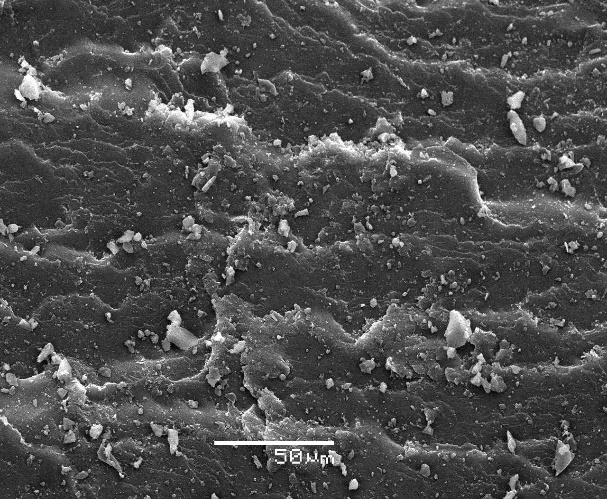
A hybrid material of activated carbon and MOFs is proposed for the adsorption of trimethylamine (TMA) emitted by the fishing industry, achieving complete removal in the aqueous phase.
Efforts focus on optimizing its surface area and selectivity for effective application under real conditions, contributing to environmental impact mitigation and improving the quality of life of nearby communities.
P. Méndez, R. Ahumada, V. Novoa & G. Salazar
University of the Bío-Bío, Avenida Collao 1201, Concepción, Chile.
* pamendez@ubiobio.cl
Competing interests: The author has declared that no competing interests exist.
Academic editor: Carlos N. Díaz.
Content quality: This paper has been peer-reviewed by at least two reviewers. See scientific committee here.
Citation:P. Mendez, R. Ahumada, V. Novoa & G. Salazar, 2025, Study of the capacity for the removal of trimethylamine using activated carbon from mineral origin (curanilahue, province of arauco) and future projections, OLORES25 Congress, Santiago, Chile, www.olores.org.
Copyright: 2025 Olores.org. Open Content Creative Commons licence. It is allowed to download, reuse, reprint, modify, distribute, and/or copy articles on Olores.org website, as long as the original authors and source are cited. No permission is required from the authors or the publishers.
ISBN: pending.
Keywords: Gaseous emissions, odors, fisheries, adsorption, nanomaterials.
Abstract
The management of odors in the fishing industry presents complex challenges, particularly due to the emission of malodorous compounds such as trimethylamine (TMA) and hydrogen sulfide, which impact both the quality of life for nearby communities and the environment. Despite advancements in various technologies aimed at mitigating these odors, many have not succeeded in completely eliminating odoriferous compounds, which persist even at trace concentrations.
This research proposes a solution through the production of activated carbon derived from mineral coal sourced from Curanilahue, enhanced with adsorbent nanomaterials (MOFs) that exhibit high specific surface area and selectivity for TMA. This hybrid material has the potential to increase TMA adsorption in emissions from fish processing plants.
High-performance liquid chromatography with fluorescence detection (RP-HPLC-FL) was employed to determine the percentage of TMA adsorption, yielding laboratory results that demonstrate 100% removal of TMA in aqueous phase (4 ppm) using pure mineral activated carbon with a specific surface area of 434 m²/g. The acidity of the prepared activated carbon facilitates this adsorption, primarily due to negative charges on its surface attributable to oxygenated groups such as carboxylic and phenolic groups.
Currently, studies are underway to enhance both the specific surface area and selectivity towards TMA by developing a hybrid material that combines activated carbon and MOFs. This material will be evaluated under real conditions, addressing both aqueous and gaseous emissions.
See the full article in other languages:
- French
- Spanish
- German
- Polish
- Arabic