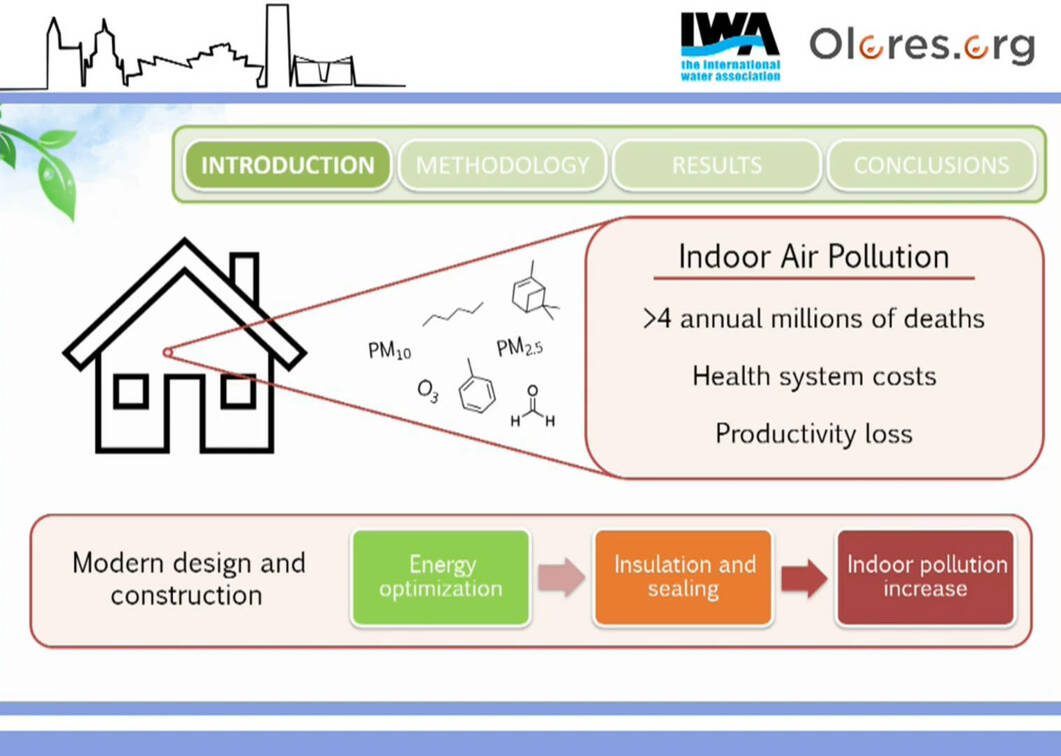
 In this work, a new biotechnology based on latex biofilms was developed and tested for VOC abatement in the context of indoor air. Four VOCs – hexane, trichloroethylene, toluene and pinene – of different solubilities were selected as model pollutants. A mixed bacteria culture enriched from activated sludge was used as inoculum for the experiments. The removal efficiency (RE) of the pollutants was evaluated for different biofilm mixtures, which involved variations in the water content, the presence of water retainers, the latex pre-treatment, and the biomass concentration.
Additionally, the influence of the pollutant load was tested. Overall, toluene and pinene REs were high (<90%), while hexane and trichloroethylene did not achieve satisfactory REs (<30%). A high-water content in the latex-biofilm mixture was proven to increase the abatement, especially when provided as nutrient solution.
 As many of you already know, the EN 13725 was published in
  , the
, the