 Alternative husbandry methods are playing an increasingly important role in terms of animal welfare. In order to ensure that odour pollution from freely ventilated "animal welfare-friendly" fattening pig houses can be adequately taken into account in odour surveys for approval procedures in Germany, the odour annoyance and respectively the hedonic odour effect was investigated in more detail starting from these types of houses.
The odour annoyance potential of three alternative fattening pig houses was investigated by creating polarity profiles according to guideline VDI 3940 part 4. It was found, that the annoyance potential of those alternative housing forms with natural ventilation and outdoor area as outdoor climate stimulus, as well as bedding (straw), is lower compared to conventional housing forms.
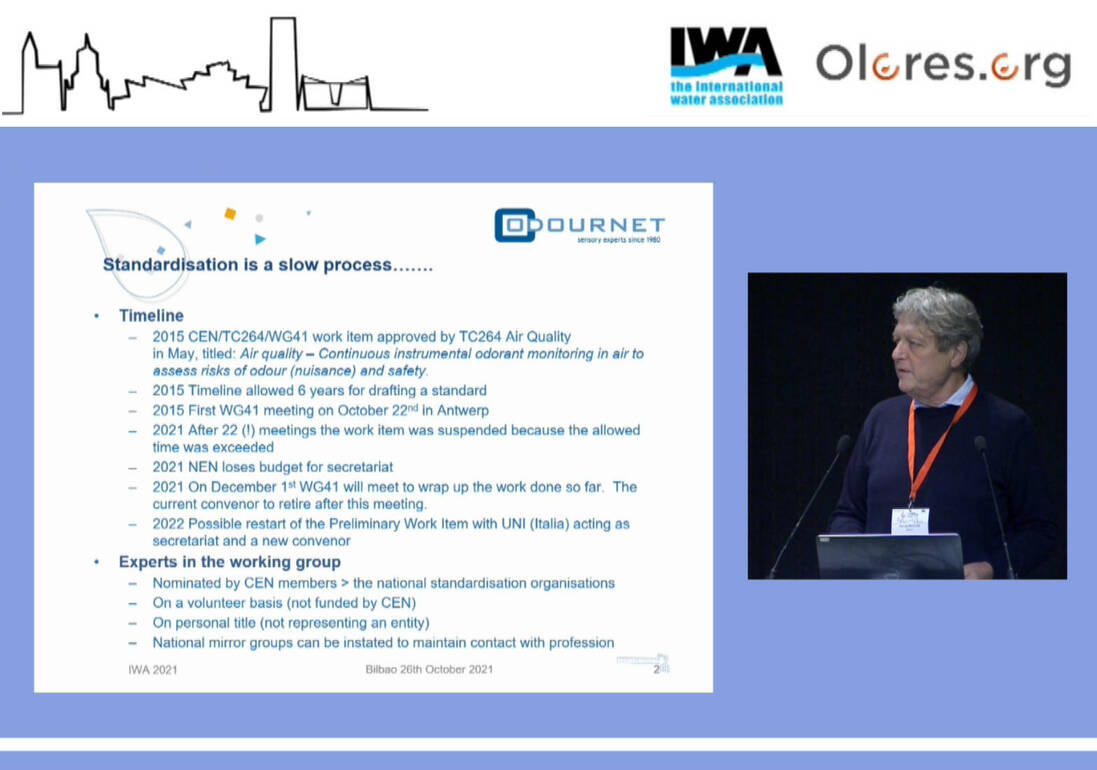 In May 2015 the decision was made, by a positive vote in Technical Committee 264 ‘Air Quality” of the Committee Européen de Normalisation (CEN), to establish a preliminary work item “Air quality – Continuous instrumental odorant monitoring in air to assess risks of odour (nuisance) and safety” which was entrusted to working group WG41 "Electronic sensors for odorant monitoring" for a period of 6 years starting on 2015-05-12. The Dutch member of CEN, NEN, was assigned the secretariat and the author of this article was appointed as convenor.
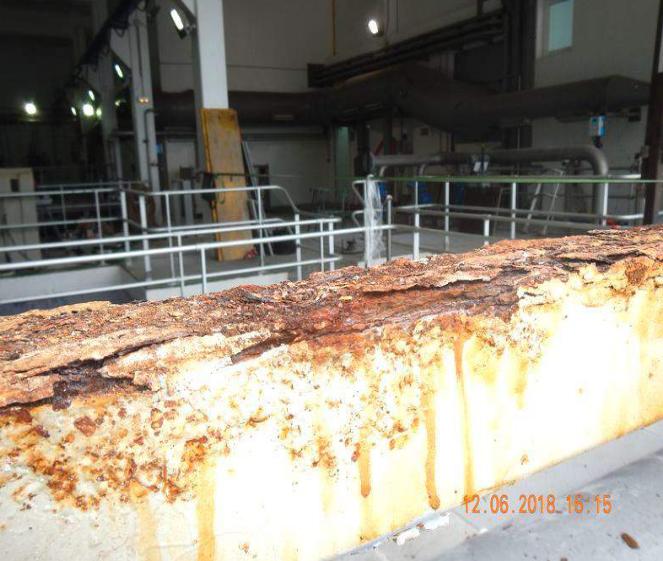 The Ondarroa WWTP receives wastewater with a very high salt load due to marine intrusion and discharges from canning industries. The high levels of SH2 in the network and in the WWTP cause serious problems of safety, odour and equipment degradation. To solve this, action has been taken in the network, reducing the contribution of sulphates at source by separating networks, reprogramming pumping and improving the management of waste from the canneries.