| |

We regret to announce the cancellation of the international conference Odora’25, which was scheduled to take place on September 16 and 17, 2025, at the Euskalduna Palace in Bilbao, Spain.
After carefully evaluating the current circumstances, we have been forced to make this difficult decision due to logistical and organizational factors that prevent us from ensuring the optimal development of the event. We are fully aware of the inconvenience this cancellation may cause to speakers, attendees, and partner companies who had already shown interest in participating, and we would like to express our sincere gratitude for the support and trust received.
Read More
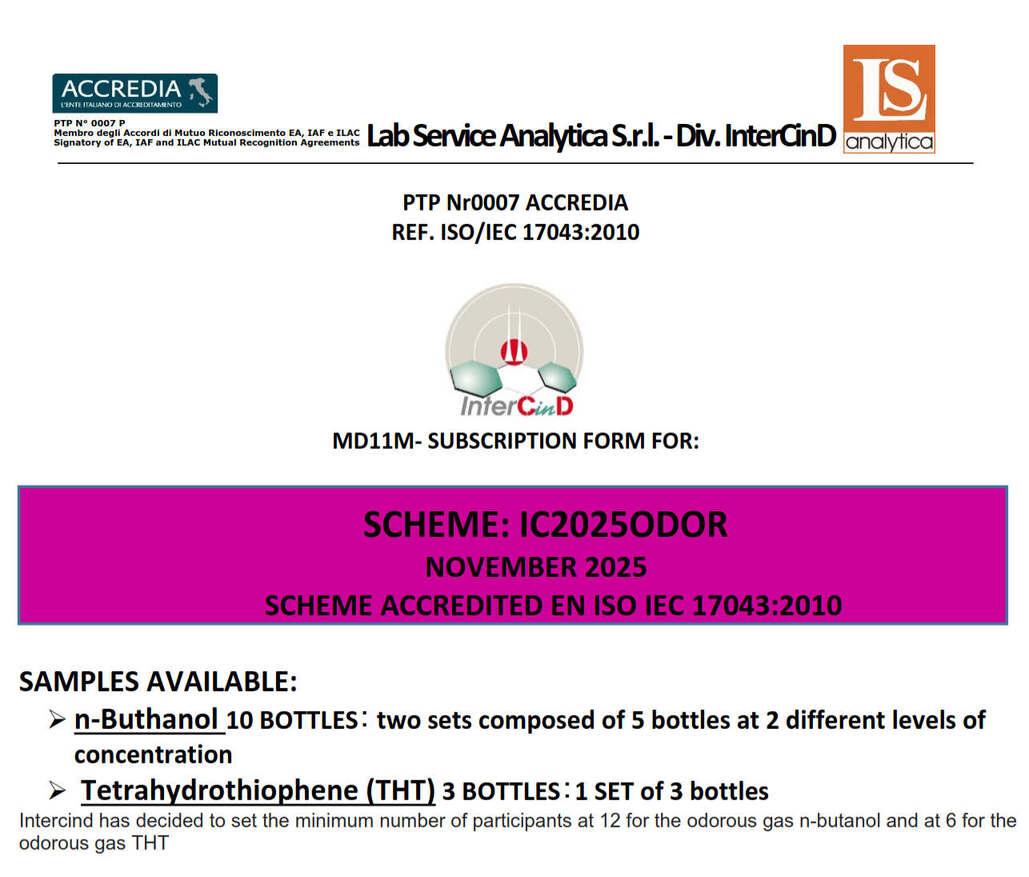
InterCinD, the division of Italian company Lab Service dedicated to Interlaboratory testing, is pleased to announce the organization of its annual Proficiency Test (PT) for Olfactometry, in accordance with the latest EN 13725:2022 standard. All olfactometric laboratories (European or non-European) are invited to participate in this 2025 edition to confirm compliance with the required performance criteria.
Registration for this year’s Proficiency Test is officially open and will remain available until July 14, 2025. This event stands as one of the most significant Proficiency Testing exercises in Europe focused on odour measurement.
Read More
The final call for abstract submissions for the 2025 Air and Odour Monitoring Conference and Trade Show, hosted by the company Scentroid, is now open. This event will take place on October 8 and 9, 2025, at the University of Toronto. The conference theme is "AIr Tomorrow: Advancing AI for Cleaner Air," focusing on AI-driven air quality monitoring, odour detection, and environmental analysis.
Those interested in participating are invited to submit abstracts showcasing cutting-edge research aligned with the conference themes. The deadline for abstract submission has been extended to May 19, 2025, at 11:59 PM ET. Abstracts must be submitted online and adhere to guidelines such as clear English, disclosure of conflicts of interest, and consent from all authors. Selected presenters must attend the conference.
Read More
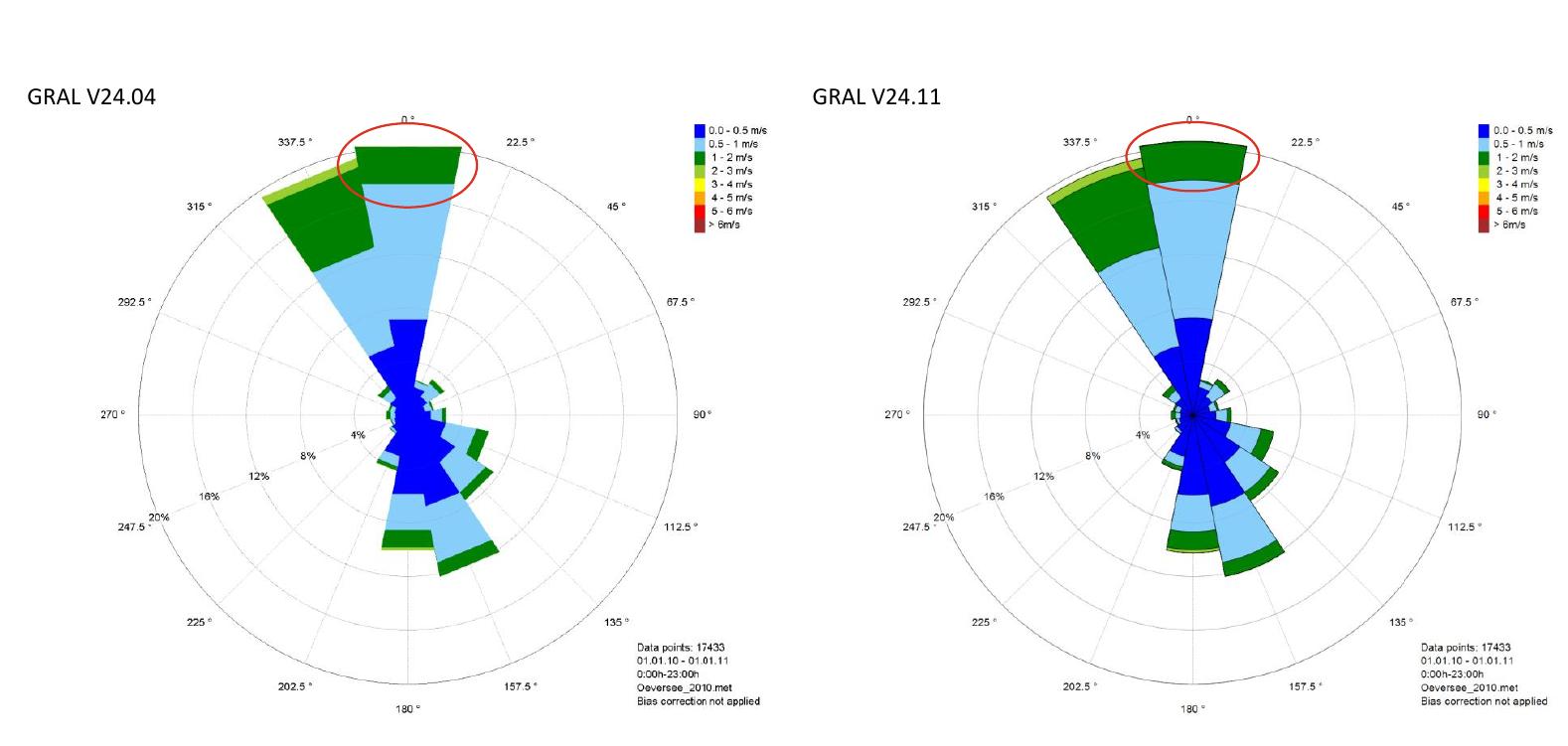
The new GRAL version 24.11 has been released, bringing important bug fixes, enhanced visualisations, and new features that improve the overall user experience. This update addresses issues in odour percentile calculations and source group management, introduces expanded export options, and changes the installation process to offer greater flexibility. The software remains open source, with its full code available on GitHub for those interested in exploring it further.
The release of GRAL 24.11 has sparked considerable interest among users of this atmospheric dispersion model. This version not only fixes bugs that previously affected the stability of certain functions but also adds visual and technical improvements that could transform how the tool is used in scientific and professional contexts. For those relying on GRAL, the update presents an opportunity to explore new capabilities and enhance their analyses.
Read More
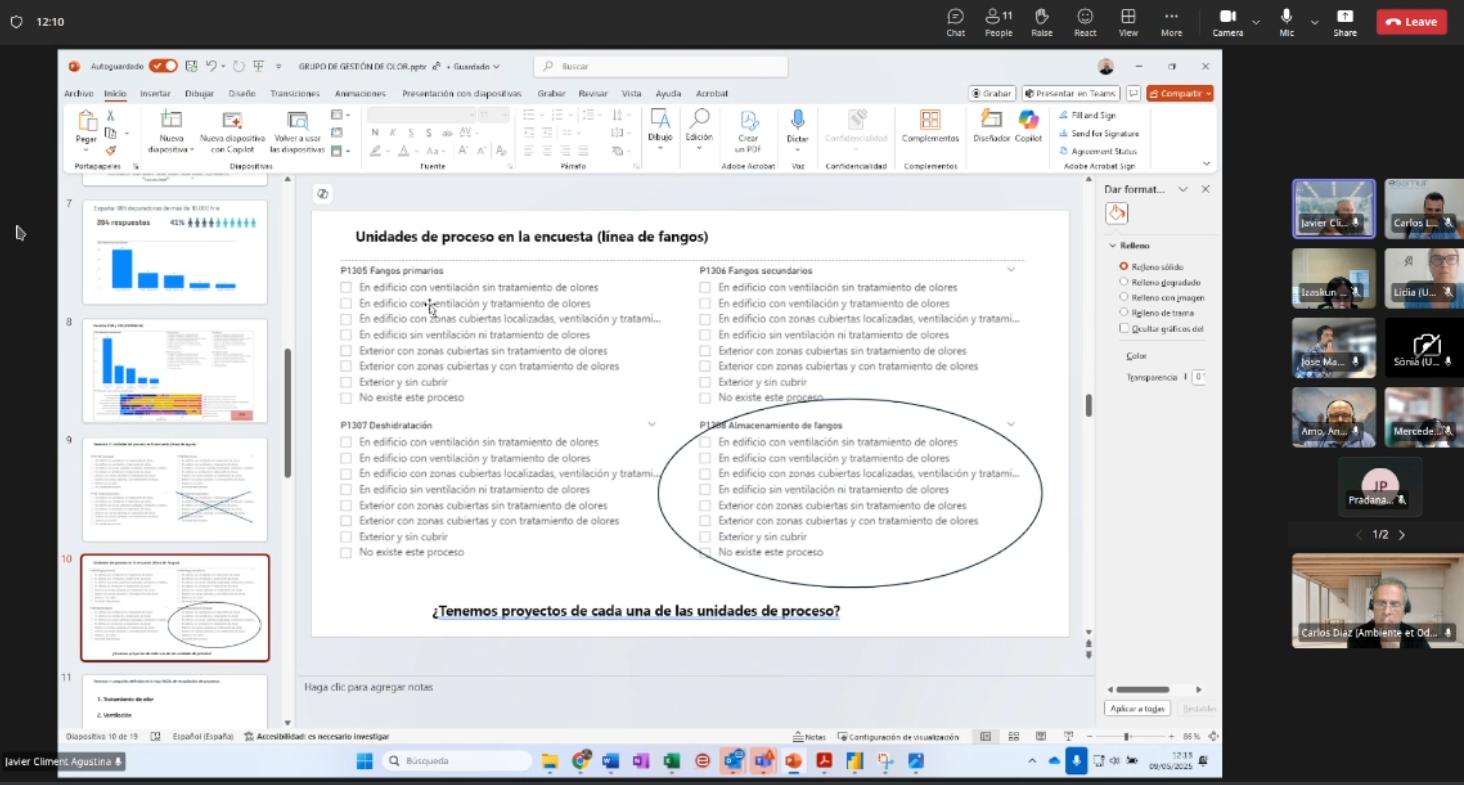
The Odour Working Group of the Spanish Association of Water Supply and Sanitation (AEAS) held a key meeting on 9 May to progress in quantifying the cost of managing odour impact in Wastewater Treatment Plants (WWTPs) across Spain. Twelve volunteers from the group discussed the best methodology to calculate these costs, following the completion of a sector-wide survey on odour management in sanitation infrastructures, recently published.
The main objective of this project is to estimate the cost of adequately managing odour impact in those facilities that currently do not do so, an important issue for improving environmental quality and community relations. To this end, the group is gathering capital expenditure (CAPEX) data on odour control systems from numerous sanitation facilities, using information obtained from public tenders and technology distributors. Additionally, the infrastructures have been classified according to the number of population equivalents they serve, allowing for an analysis of deodorisation costs within each range and for each process unit (pre-treatment, grit and grease removal, primary treatment, primary and secondary sludge, dewatering, sludge storage, among others).
Read More
FAST (Federazione Italiana delle Associazioni Scientifiche e Tecniche) is organizing a new online training course titled “Odour Emissions: Regulatory, Legal, Technical, and Methodological Aspects. Practical Case Studies.” The course will take place over four webinar sessions and is aimed at professionals dealing with environmental impact issues related to odour emissions. The sessions will be held online, in Italian, and will include expert presentations, interactive discussions, and case-based learning. The course will be held the 13-14-20-22 May 2025.
The webinar organized by FAST will focus on key topics such as national and international regulations, measurement techniques, odour modelling, and mitigation strategies. It is specifically designed for professionals working in sectors where odour emissions are a concern - such as wastewater treatment, waste management, agriculture, and industry. The goal is to provide up-to-date knowledge, practical tools, and regulatory guidance to ensure compliance and improve environmental performance.
Read More
SPECIAL CONFERENCE ODORA'24
As you probably know, Olores.org organized the ODORA'24 Conference on November 5-6, 2024, at the BEC, Barakaldo, Spain. These events bring together engineers, scientists, researchers, students, local authorities, managers, and other professionals to address and discuss emerging odor problems. More than 120 people, coming from 9 different countries, attended this event, and more than 30 papers were presented.
That said, we are happy to gradually share the abstracts of the papers presented, as well as the videos and PPT files in Spanish of those who have given their permission to publish them.
Enjoy the reading!

In Chile, there have been several emblematic cases related to odor episodes that have caused conflict due to their nuisance, affecting people's quality of life. In the 2022, the first pollutant emission standard for pig farms was created, but it does not guarantee the elimination of community discomfort.
Even when legal limits are met, complaints persist, so companies are advised to analyze the root causes of complaints and use meteorological data to improve their response. This way, they can better manage impacts and maintain more effective communication with the community.
A. Rivera
Read More

The new Copero Advanced Composting Plant, launched by EMASESA in Seville, addresses two main challenges: recovering sludge from urban wastewater for agricultural use and significantly reducing odor emissions impacting local residents.
Through innovative operational controls and advanced monitoring systems, the facility ensures efficient composting while minimizing environmental and social impacts.
S. Romero, E. Toro & F.J. Busto
Read More
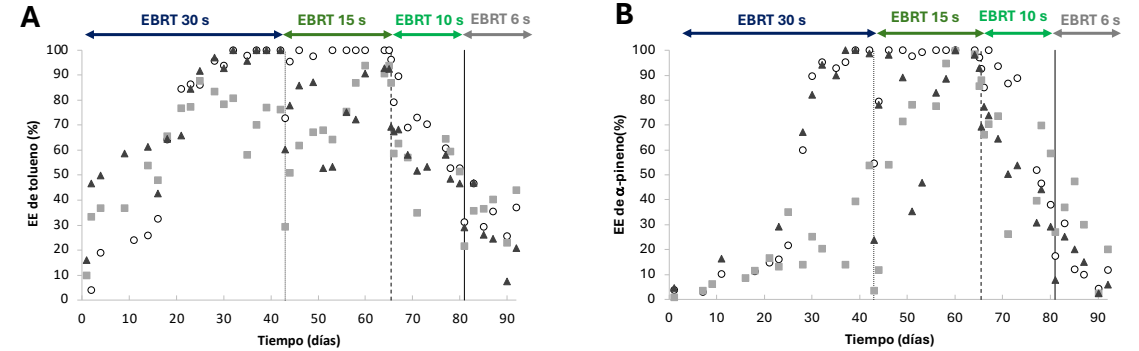
This research explores using recycled by-products from wastewater treatment plants as packing materials in biotrickling filters (BTFs) for odour removal.
Three materials-commercial Pall rings, recycled plastic bottle caps, and 3D-printed extruded recycled plastic carriers-were tested for treating gases containing H₂S, NH₃, and VOCs. Results showed 100% removal of H₂S and NH₃ at gas residence times up to 6 seconds, and over 90% VOC removal at longer residence times. The 3D-printed recycled plastic carrier achieved the best performance, including complete removal of toluene and α-pinene. The study confirms that recycled plastics from the water cycle can be effective, sustainable packing materials for BTFs in odour treatment..
S. Sáez-Orviz a-b, R. Lebrero a-b, L. Terrén c, S. Doñate c, M.D. Esclapez c, L. Saúco c, R. Muñoz a-b*
Read More

This project demonstrates that multisensor systems with electrochemical sensors, enhanced by Data Learning models, can accurately and reliably monitor hydrogen sulfide (H2S) in wastewater treatment plants without costly or frequent manual calibration.
The pilot phase, conducted in early 2024, achieved excellent agreement with reference analyzers, offering a low-cost, low-maintenance, and innovative solution for continuous H2S measurement in WWTPs..
M. Padilla, S. Udina, E. Flores, M. Escribano, F. Ramírez, J. Perelló
Read More

The rapid expansion of biogas plants requires implementing effective measures to control air pollution, especially odors and greenhouse gas emissions.
Advanced technologies and pre-operational studies are essential to monitor, minimize, and prevent environmental impacts before the facilities become operational.
A. Amo
Read More
Read older Newsletters here.
|
|




