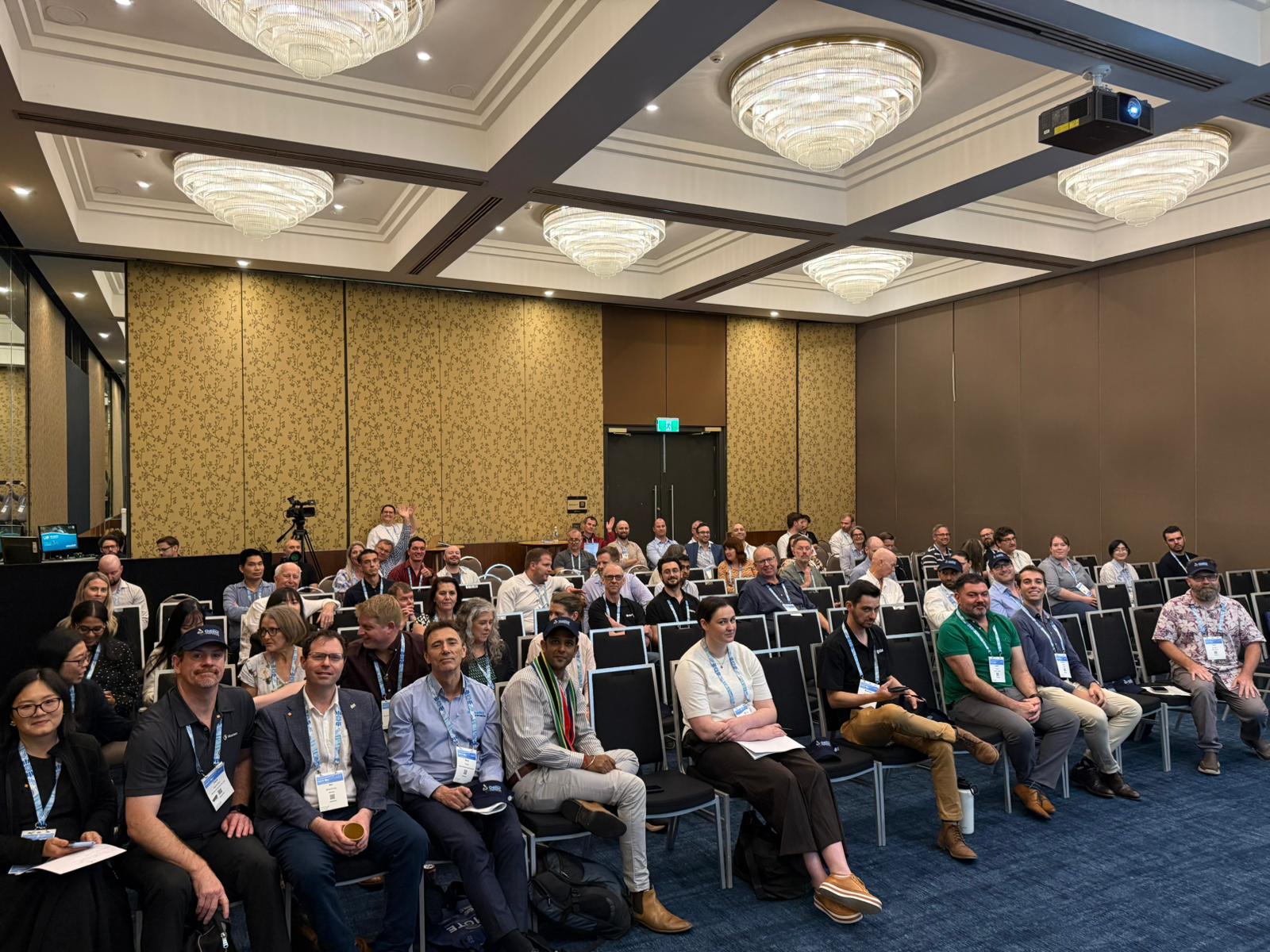
The recent CASANZ conference in Cairns was a great opportunity for the air quality and odour community to meet, exchange ideas and strengthen professional connections.
Bringing together the Clean Air & Environment Conference and the Asia-Pacific Odour Conference created a particularly valuable space for researchers, consultants, regulators, industry representatives and technology suppliers. The programme covered practical subjects including odour assessment, emissions, monitoring, modelling, air-quality management and new measurement technologies.
Beyond the technical sessions, Cairns provided an excellent setting for conversations between colleagues from Australia, New Zealand and across the Asia-Pacific region. These exchanges are often where new collaborations, project ideas and better approaches to common challenges begin.
For the odour sector, the conference confirmed a growing interest in better data, more reliable monitoring and solutions that can be applied in the field. We look forward to seeing how the discussions started in Cairns will develop in the months ahead.
The odour stream in Cairns covered the full range of topics that practitioners deal with every day. Sessions looked at odour assessment methods, dispersion modelling and how to interpret results in real projects. There was also strong interest in emission control technologies and in regulatory frameworks that are both clear and workable for industry.
Several presentations focused on new tools, including artificial intelligence and digital platforms for odour surveillance, complaint handling and risk assessment. These sessions showed how data from sensors, field inspections and community feedback can be brought together to support faster and more consistent decision-making.
Workshops before the main conference gave delegates a chance to go deeper into odour management in practice, looking at measurement, modelling, health aspects and regulation. This combination of workshops, technical sessions and panel discussions made it easier to connect theory with the problems that consultants, operators and regulators face on site.
The programme featured international keynote speakers and a wide range of peer‑reviewed technical presentations from practitioners across Australia, New Zealand and South‑East Asia. Speakers included consultants, researchers, regulators and industry representatives, which helped to keep the discussions grounded in real-world experience.
Panel sessions and forums were supported by experienced moderators from the air quality and odour community. These moderators helped to draw out practical lessons from each presentation and to link different topics, from measurement and modelling to community engagement and compliance. The result was a set of sessions that felt connected and relevant, rather than a series of isolated talks.
Overall, the quality of the presentations and the engagement from speakers, moderators and delegates made the Cairns conference a clear success for the odour community and for CASANZ as a whole.
Photo: Odour session at CASANZ 2026, courtesy of Geordie Galvin and rest of attendees.