There is no translation available.

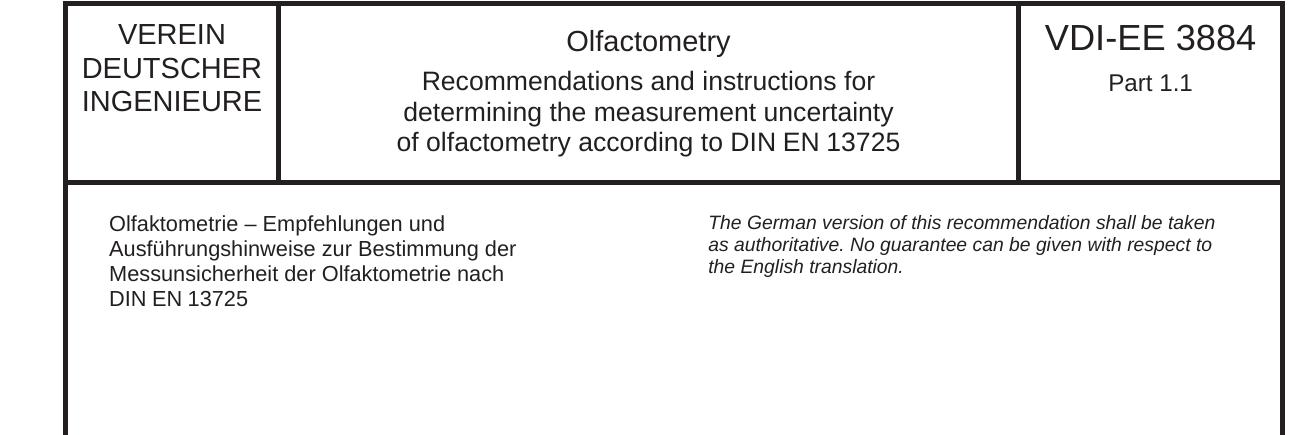
   The German standard for calculating uncertainty in odour measurements—VDI-EE 3884 Part 1.1—was officially published in October 2024. That is a year ago, so why did we wait that long to publish something about this new standard? because it is a bit complex and there is a bit of a history here. That history started during the development of the revission of the EN13725 a few years ago. In the conversations related to the calculation of the uncertainty, there were two groups there, one that we will call the "Italo-Dutch" school and another one being the "German" school. The thing is that the Italo-Dutch school finally developed this part. The reasons why that happened are well beyond this simple journalistic piece of text, but the Germans were not happy about it, and this was the begining of the path that led to the standard VDI-EE 3884 Part 1.1.

   The EN 13725:2022 standard came with a new set of statistical tools for calculating uncertainty. However, until now, work in certain areas related to the measurement of uncertainty in environmental samples had been purely theoretical. This aspect has undergone significant methodological revision in Germany in response to the results of a comprehensive comparative study. The new VDI-EE 3884 Part 1.1 standard modifies and corrects the method of calculating uncertainty, moving away from the core elements of the EN 13725:2022 standard.
There is no translation available.

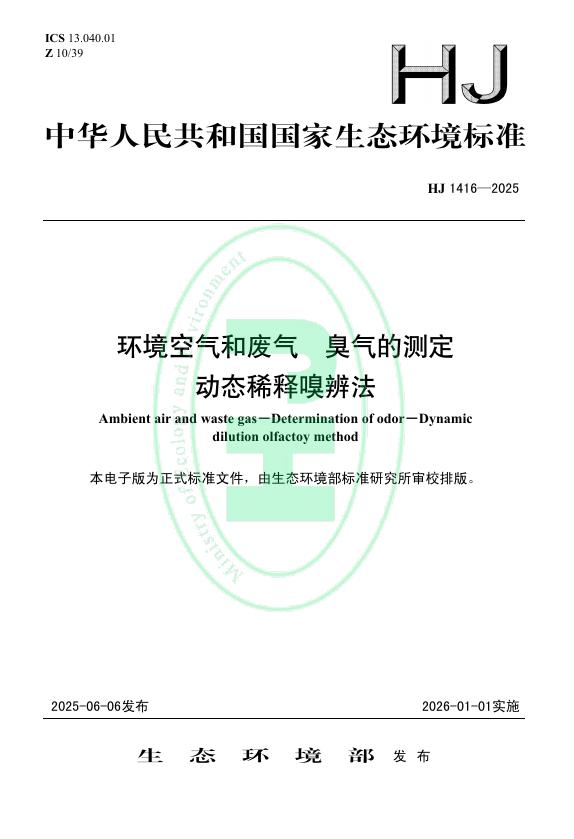
   China has introduced the new environmental standard HJ 1416-2025 for the determination of odour concentration and emission rate by dynamic olfactometry. It was published on June 6, 2025, and is set to be implemented on January 1, 2026. The document is identified as a "Industry standard - environment" (Standard No. HJ 1416-2025), which is different from a national standard formally published by the Chinese National Standardization Administration (SAC). Although the methodology proposed is dynamic olfactometry, this 10-page standard is a basic text but technically aligned in many aspects with the recent 124-page EN 13725:2022.

   HJ 1416-2025 is an environmental industry standard issued by the Ministry of Ecology and Environment. The official full text in Chinese is publicly accessible from the Ministry of Ecology and Environment website and can be downloaded here. This standard establishes updated, scientifically rigorous methods for assessing odour pollution from ambient air and waste gas sources using dynamic dilution olfactometry with trained human assessors, aligning domestic regulatory practices with international advances in odour measurement.

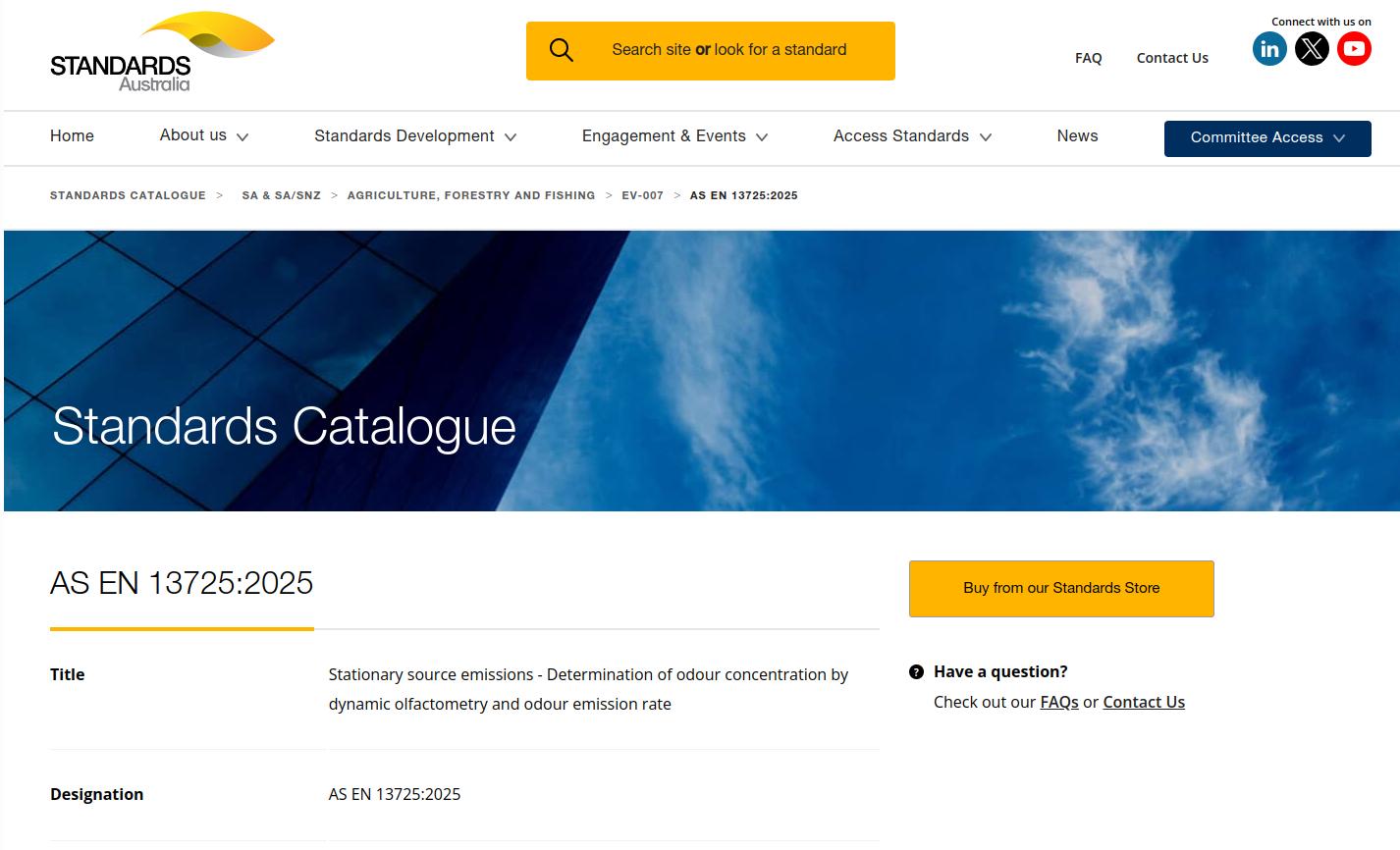
L'Australia ha recentemente adottato lo standard EN 13725:2022 per la misurazione degli odori, allineando la propria metodologia all'ultimo standard europeo. La nuova norma AS EN 13725:2025 sostituisce la precedente AS/NZS 4323.3:2001, basata sullo standard europeo del 2003. Il cambiamento introduce aggiornamenti nella calibrazione, nella valutazione dell'incertezza e nelle procedure di campionamento.

Per chi si occupa di monitoraggio ambientale e di valutazione degli odori, è importante comprendere questo aggiornamento. L'adozione di uno standard recepito significa che l'Australia utilizza ora la stessa metodologia dell'Europa, garantendo la coerenza delle misurazioni.

Altri articoli …

All the content here under Creative Commons license