There is no translation available.
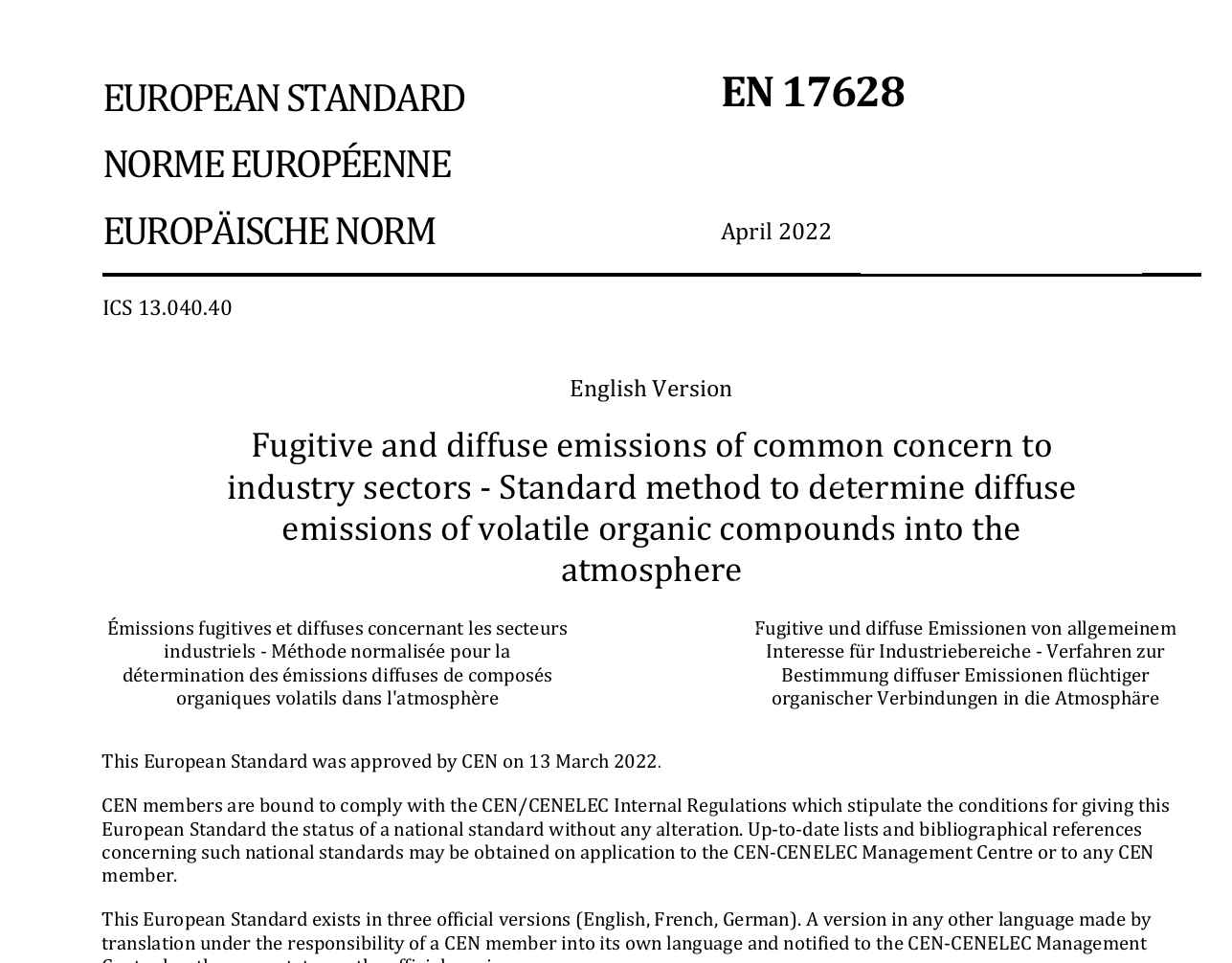 The European Standard EN 17628, just published, now defines not just one method but five different methodologies to evaluate fugitive and diffuse emissions of Volatile Organic Compounds (VOCs). Isn't that wonderful? Well, hold your horses because they ain't easy methods!
EN 17628 deals with Fugitive and diffuse emissions of common concern to industry sectors. This standard defines a series of methodologies to determine diffuse emissions of VOCs into the atmosphere from industrial sources. These methods are Optical Gas Imaging (OGI), Differential Absorption Lidar (DIAL), Solar Occultation Flux (SOF), Tracer Correlation (TC), and Reverse Dispersion Modelling (RDM).
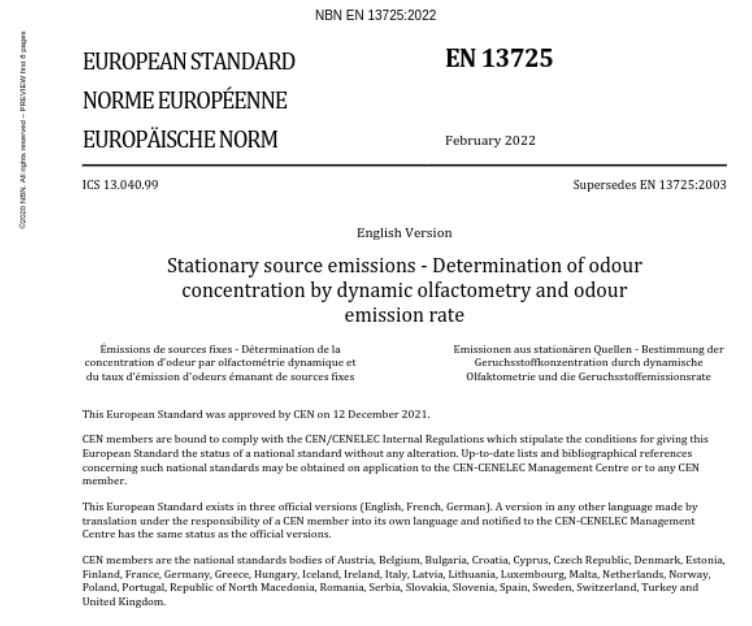 The moment finally arrived and here you have the new EN 13725:2022 finally published. As many of you know, the European standard was published first in 2003. Four years later in 2007 the doc was revisited, and no changes were made. Another four years later in 2011 the working group (WG) dealing with this standard considered that it was time to review the text profoundly and the 20th of November 2012 the first meeting took place.
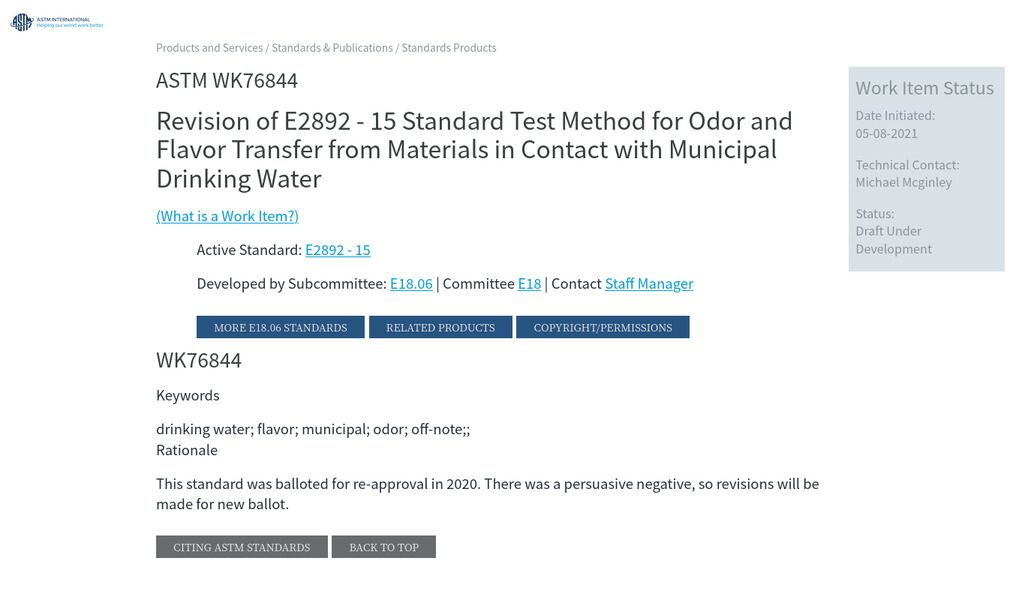 The WK76844 - Standard Test Method for Odor and Flavor Transfer from Materials in Contact with Municipal Drinking Water is a work item revision to existing standard E2892-15 developed by Committee E18.06. This test method describes procedures for measuring odor and flavor properties of new products which may come into direct contact with municipal drinking water.