There is no translation available.

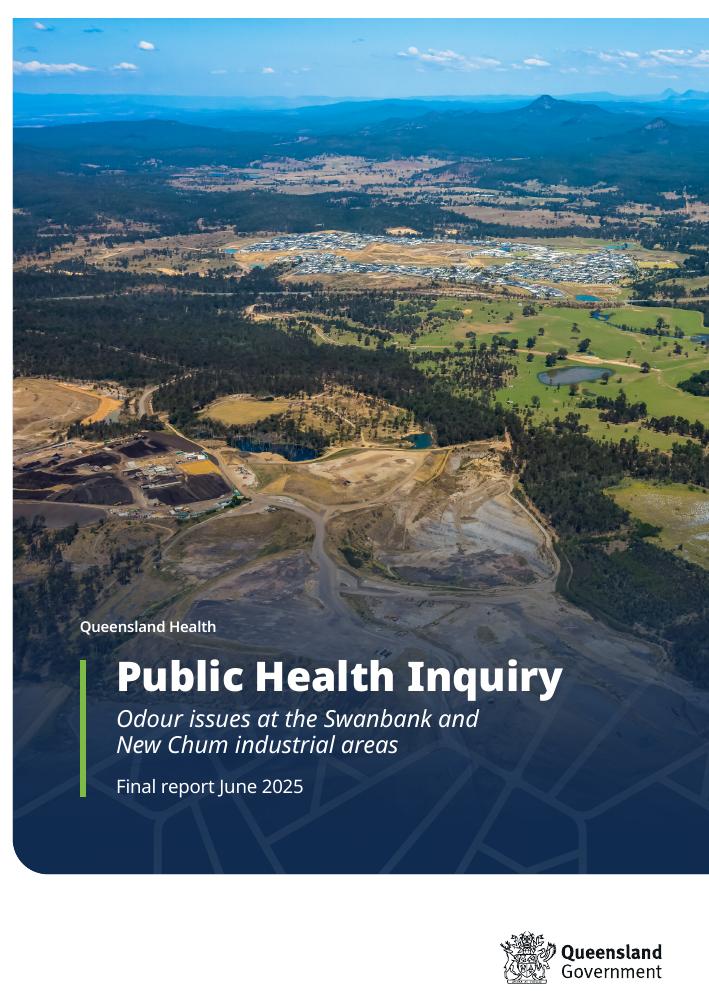
   In Ipswich, Queensland, Australia residents have for some time reported persistent odours coming from nearby industrial and waste facilities at Swanbank and New Chum. These odours have caused discomfort and concern among the community, with some attributing health issues like respiratory problems and nausea to the pollution. The situation prompted local leaders and government authorities to take notice after many residents raised complaints.

   To address these concerns, a Public Health Inquiry was initiated by the government to investigate the impact of these odours on community health. The Inquiry aimed to collect evidence and testimonies from residents, experts, and industry operators. The goal was to assess the extent of harm, identify causes, and recommend actions. The final report from the Swanbank Public Health Inquiry has been finally published this Wednesday, 19 November, and can be accessed at this link.
There is no translation available.

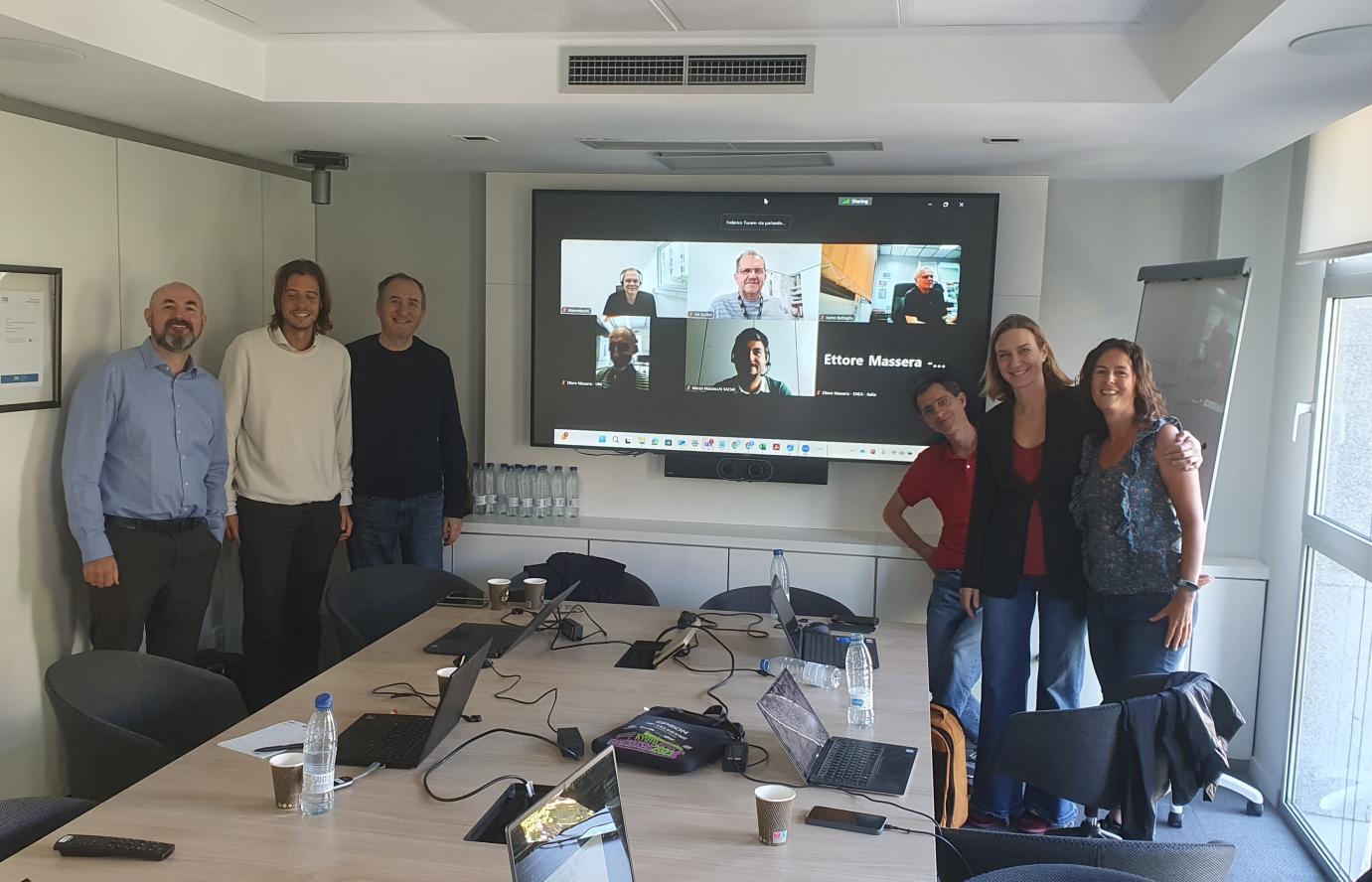
   On September 22 and 23, a new meeting of CEN/TC 264/WG 41, that is, the Working Group 41 of the Technical Committee 264 on Air Quality of the European Committee for Standardization, took place. The agenda for the day included several items, but in the end, draft 3, which deals with field validation, took up most of the group's working hours.

   The WG41 is working in three standards: 1) Instrumental Odour Monitoring Systems (IOMS) - Part 1: Definitions and general aspect; 2) Instrumental Odour Monitoring Systems (IOMS) - Part 2: Technical specifications and QA/QC requirements and 3) Instrumental Odour Monitoring Systems (IOMS) - Part 3: Field validation. This last draft has not been discussed during the second stage of the development of the standard until now. But the experts took the challenge and a text was delivered on time to activate the 3 PWIs, which is the next step in the CEN process.

There is no translation available.

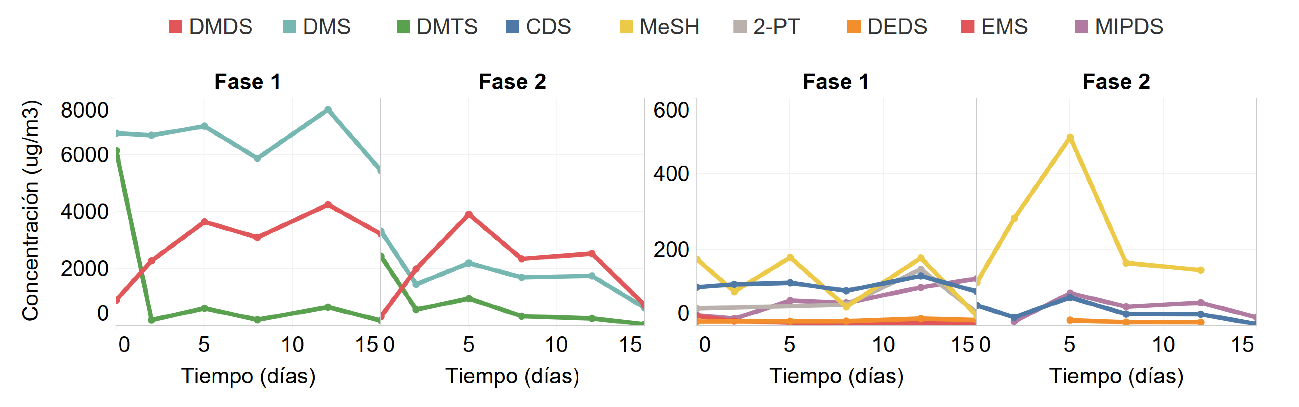
   Wastewater treatment configuration and operation influence the temporal variability of odour emissions from anaerobically digested biosolids.

   Analysis using GC-SCD, TD-GC-MS, and sensory evaluation revealed higher concentrations and detection frequencies of key VSCs (DMDS, DMS, DMTS, MeSH) during Phase 1, often exceeding odour thresholds and challenging their beneficial reuse. Extended monitoring is advised to improve management practices and support sustainable land application.

T. Guerrero1,*, R. Fisher1, A. Prata1,2 & R. Stuetz1

1UNSW Water Research Centre, Departament of Civil and Environmental Engineering, University of New South Wales – UNSW Sydney, Sydney, Australia

2Department of Environmental Engineering, São Paulo State University “Júlio de Mesquita Filho” – UNESP/Rio Claro, Brazil

Altri articoli …

All the content here under Creative Commons license