There is no translation available.
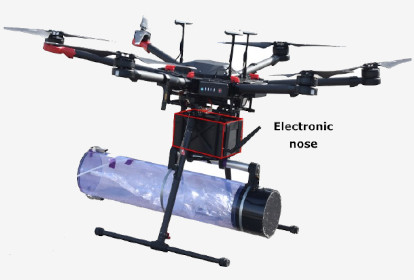
Wastewater treatment plants (WWTPs) produce gaseous emissions that might be olfactory annoying to the surrounding population. Current odour assessment methodologies are based on costly and infrequent olfactometry measurements involving human panels, and continuous monitoring of few gases via fixed gas detectors installed on the plant.
This leads to odour measurements with low temporal and spatial resolution, hindering an accurate characterization of the odour episodes. The main goal of the SNIFFDRONE project, presented in this paper, is to develop a drone with olfaction capabilities to acquire spatially-dense odour measurements and localize the source of odour nuisances in WWTPs.
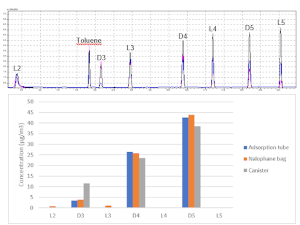 There is increasing interest in the usage of biogas produced from wastewaters, anaerobic digesters and landfill sites as a source of green energy. Biogas generated from these types of sites require process monitoring due to contamination with siloxanes derived from hygiene products, detergent, antifoams, etc. Siloxanes are troublesome impurities in biogases in engine sources.