There is no translation available.

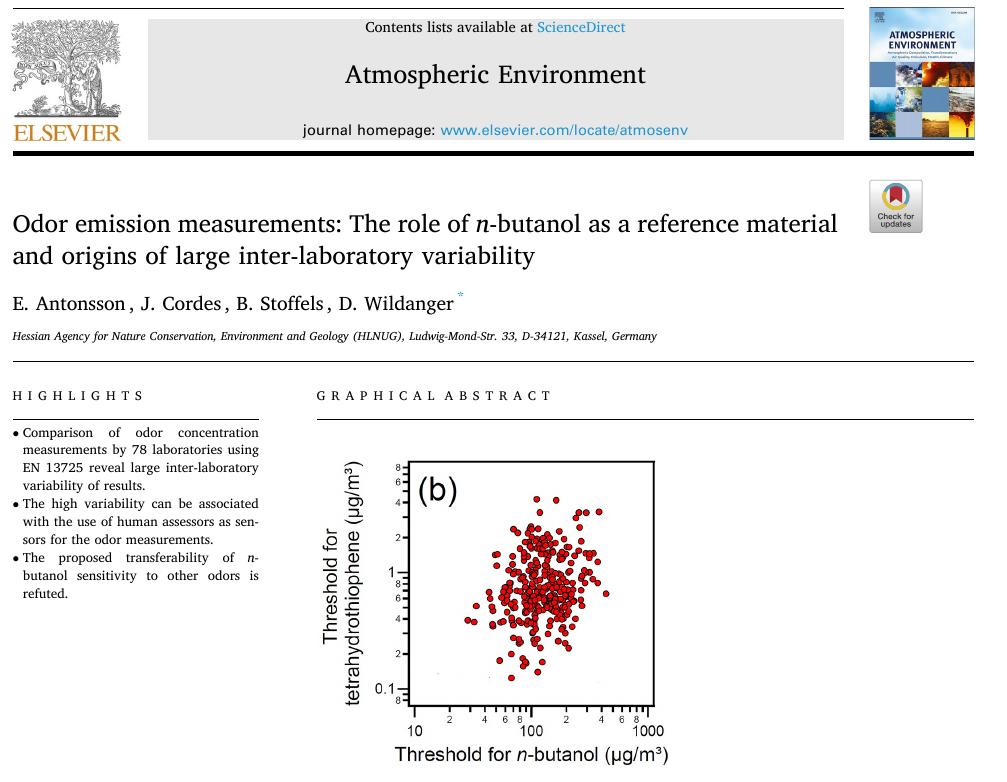
   In June this year, Mr Antonsson and his collaborators dropped a bombshell on the waterline of the standard governing dynamic olfactometry with the publication of their scientific paper published in Atmospheric Environment. The EN 13725 standard assumes that assessors' sensitivity to 1-butanol is transferable to other odours. However, the study reveals that this sensitivity transfer is not valid for other odorous substances, calling into question the uniform application of the standard.

   You may imagine how much debate this research has generated. We have participated in threads and threads of conversations with several world experts in odour management, commenting on the results of the following paper. The paper analyses the reproducibility of odour testing using the EN 13725 standard. The study focuses on the variability of results between different laboratories and how the selection of assessors and the number of repetitions influence that variability. These are some key findings of the paper.

There is no translation available.

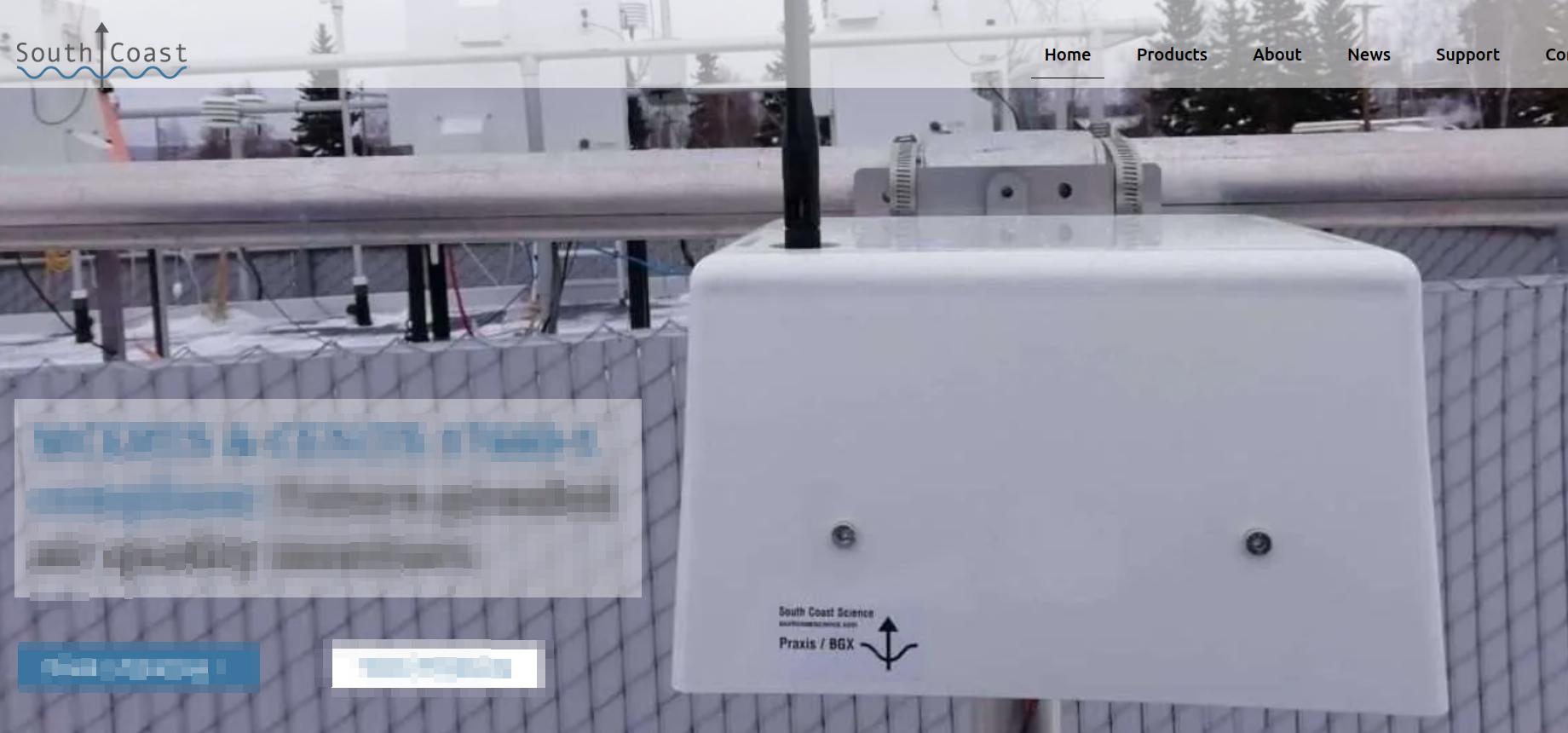
   South Coast Science Limited, a company renowned for its advanced air quality monitoring technology, has officially announced that it ceased trading as of 17th July 2024, entering into insolvency. The company, based in Brighton, was known for designing and manufacturing affordable, high-density environmental monitoring networks, delivering accurate real-time data to evidence compliance, inform decision-makers, and support community action.

   David Johnson, the Business Development Director, is a prominent figure in the sector. With a distinguished career and deep knowledge of the market for environmental monitoring systems, Johnson has been instrumental in the growth and success of the company. His expertise and leadership have helped establish South Coast Science as a benchmark in the industry, particularly noted for the reliability and precision of its products.

There is no translation available.

   The latest version of the GRAL dispersion model, 24.04, has been released and it includes several updates and bug fixes. GRAL, a Lagrangian dispersion model, is extensively used for simulating pollutant dispersion, and these updates are expected to enhance its reliability in various environmental scenarios.

   A significant fix in version 24.04 addresses an issue that caused incorrect concentration calculations within buildings. This bug, present since version 23.11, affected flat terrain and certain building configurations. Correcting this issue ensures that GRAL can provide more accurate simulations in urban settings where building interactions play an important role.

Altri articoli …

All the content here under Creative Commons license