There is no translation available.

   Water resources recovery facilities (WRRFs) are sources of direct emissions of greenhouse gases (GHGs) and volatile organic compounds (VOCs) produced by biological processes and indirect GHG emissions due to the energy consumed to operate the plant. The direct emissions also contribute to odour issues of WRRFs. Aeration of the biological tanks accounts for 50-60% of the total energy consumption of a WRRF and is therefore the major source of indirect GHG emissions.

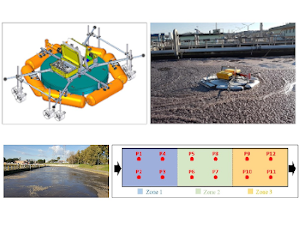
   The optimized management of oxidation processes is consequently associated with environmental and economic benefits. The innovative solution proposed in this study consists of an automated self-moving prototype (LESSDRONE) for real-time monitoring of oxygen transfer efficiency (OTE) and of GHG emissions from the aerated tanks during operation, and a protocol for converting LESSDRONE measures and specific WRRF data into actions aimed at minimizing carbon footprint (CF) and energy demand.

There is no translation available.

   Since this month November 2022, GRAL dispersion model presents a new website: https://gral.tugraz.at/ The Graz Lagrangian Model - GRAL - was initially developed in 1999 at the Institute of Thermodynamics and Sustainable Propulsion Systems at Graz University of Technology.

   In addition, new features and bugfixes have been implemented in the new GRAL Version 22.09, which is now available on the GRAL homepage.

There is no translation available.

   Determining the emission impact of area sources (biofilters, wastewater tanks) on air quality and the environment by classic measurement techniques (i.e. static hood sampling), is currently lacking in pertaining uniform and representative emission data by being restricted in sampling area, time and safety. This creates an extra hindrance when emission rates from such sources need to be determined by the fluxwindow method, which implies measuring emission concentrations up- and downwind along different horizontal and vertical profiles of the area source.

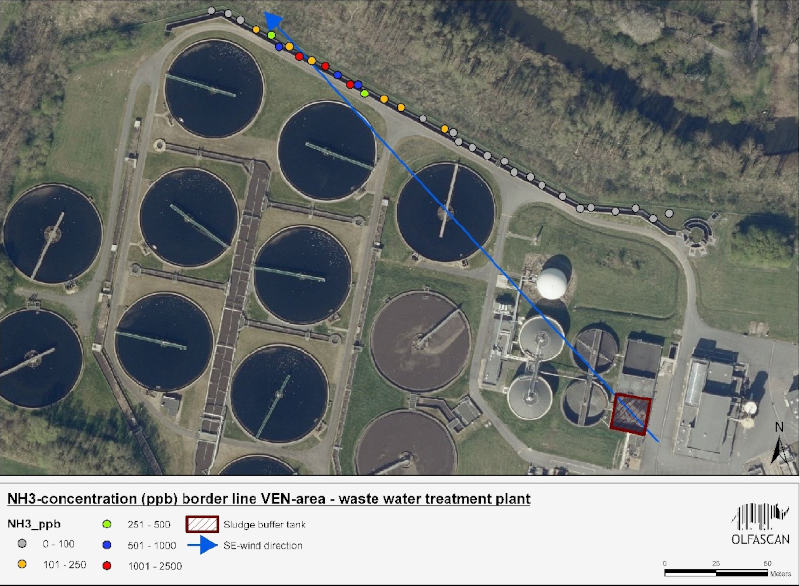
   In an effort to improve on this matter, the possibility of using a drone equipped with an emission detection laboratory (OLFASCAN Flying Lab) to quantify emission concentrations and rates via the fluxwindow method from a sludge buffer tank was investigated. The OLFASCAN Flying Lab is equipped with several electrochemical sensors for performing air quality measurements and was attached to a DJI Matrice600 PRO RTK drone.

Altri articoli …

All the content here under Creative Commons license