There is no translation available.
 One of the biggest sources of complaints for odors in Chile is the facilities for the intensive livestock installations (poultry and pigs), mainly due to their size and sometimes their relative proximity to populated places.
This gave rise to the national environmental authority to prioritize these activities when announcing the elaboration of a regulation that would go in the line of establishing the emission limit values.
M. Zacarías, A. Ulloa
Bestenchile, Providencia, Santiago de Chile.
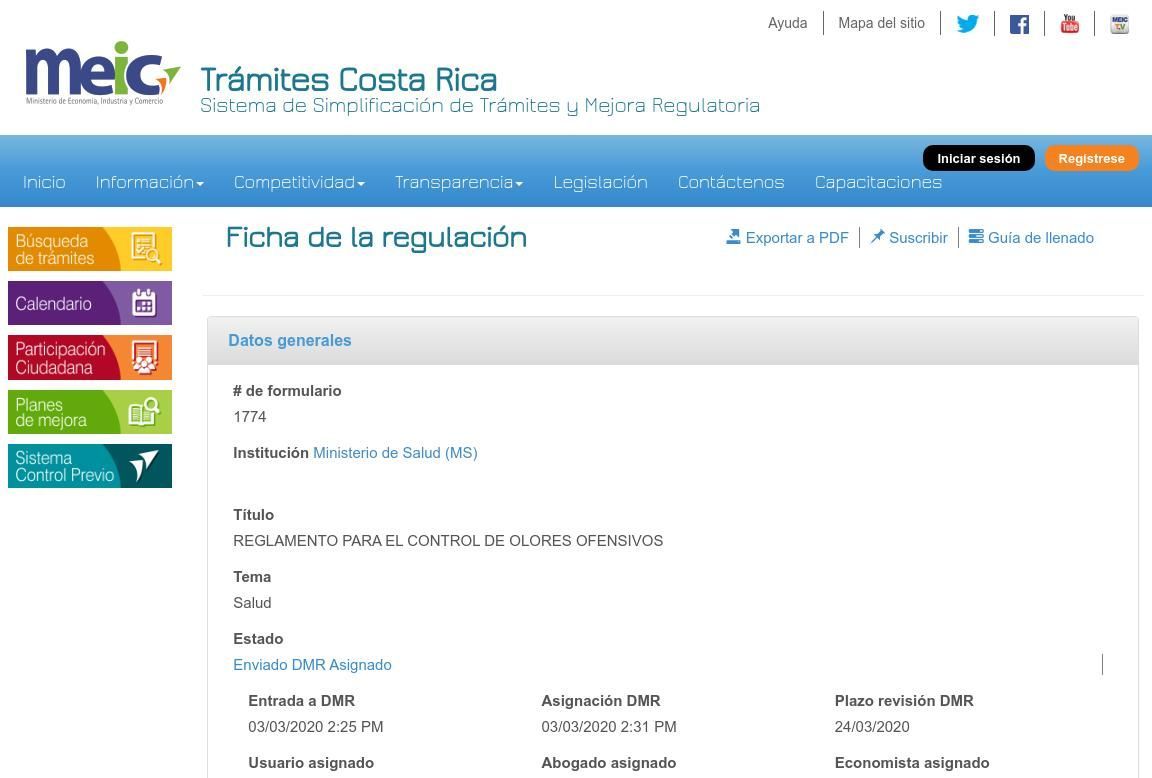 The government of Costa Rica has published a Draft Regulation for the control of offensive odours that establishes limit values for odour in ambient air. The draft is in the public consultation phase which ends tomorrow, the 17th. This legislation establishes limit values of 3, 5 and 7 odour units in ambient air for a list of activities potentially generating odour nuisance, without specifying any percentiles. In addition, a general value of 10 odour units is established for any activity not mentioned in the above list.
 In order to improve the quality of life of people, the Ministry of the Environment of Chile is strengthening the regulatory framework for odours. In this context, the main objective of this paper is to present a design proposal for an odour regulation, based on international experience and the national situation.