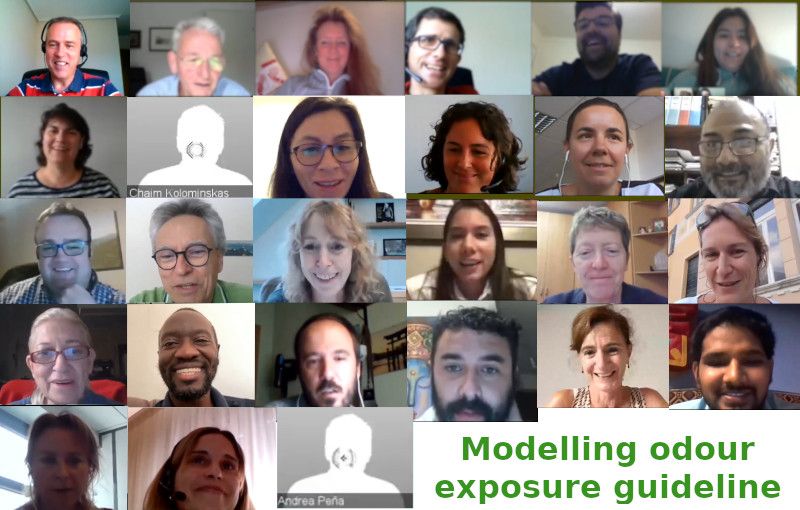
 The 27th of August 2020 took place the kickoff meeting of the group dealing with the development of the first international guideline on the assessment of odour exposure by using dispersion modelling. To date, there are already 36 professionals from Belgium, Italy, France, Chile, Ecuador, Australia, Brazil, United Kingdom, Ireland, China, Spain, USA, India, Peru, Qatar and Austria participating in this initiative.
This development is being led by Dr. Günther Schauberger, professor of the University of Veterinary Medicine of Vienna, and Ms. Jennifer Barclay, principal scientist of Atmospheric Science Global (ASG) in New Zealand. The list of volunteers in this initiative at this stage is the following:
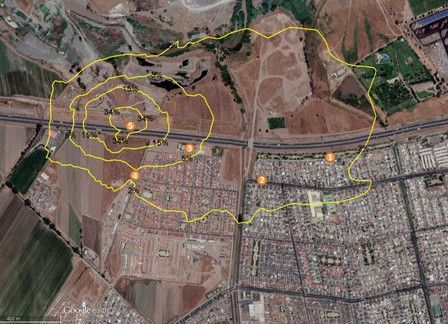 Approximately 50% of the wastewater from the "big Santiago" (Santiago Metropolitan Region, Chile) converges into the Chamber of Mixing and Distribution of Wastewater - CAM04 to be later conducted towards the Mapocho Trebal Sewage Treatment Plant.
 A new development on the first worldwide guideline on the assessment of odour exposure by using dispersion modelling will take its first steps. At this stage, there are many initiatives related to dispersion modelling worldwide but there is no specific guideline for odour modelling to our knowledge. This is an initiative promoted by several experts in the area of modelling that will be led by Mr. Günther Schauberger and Ms. Jennifer Barclay. First meeting will take place the 27th of August.