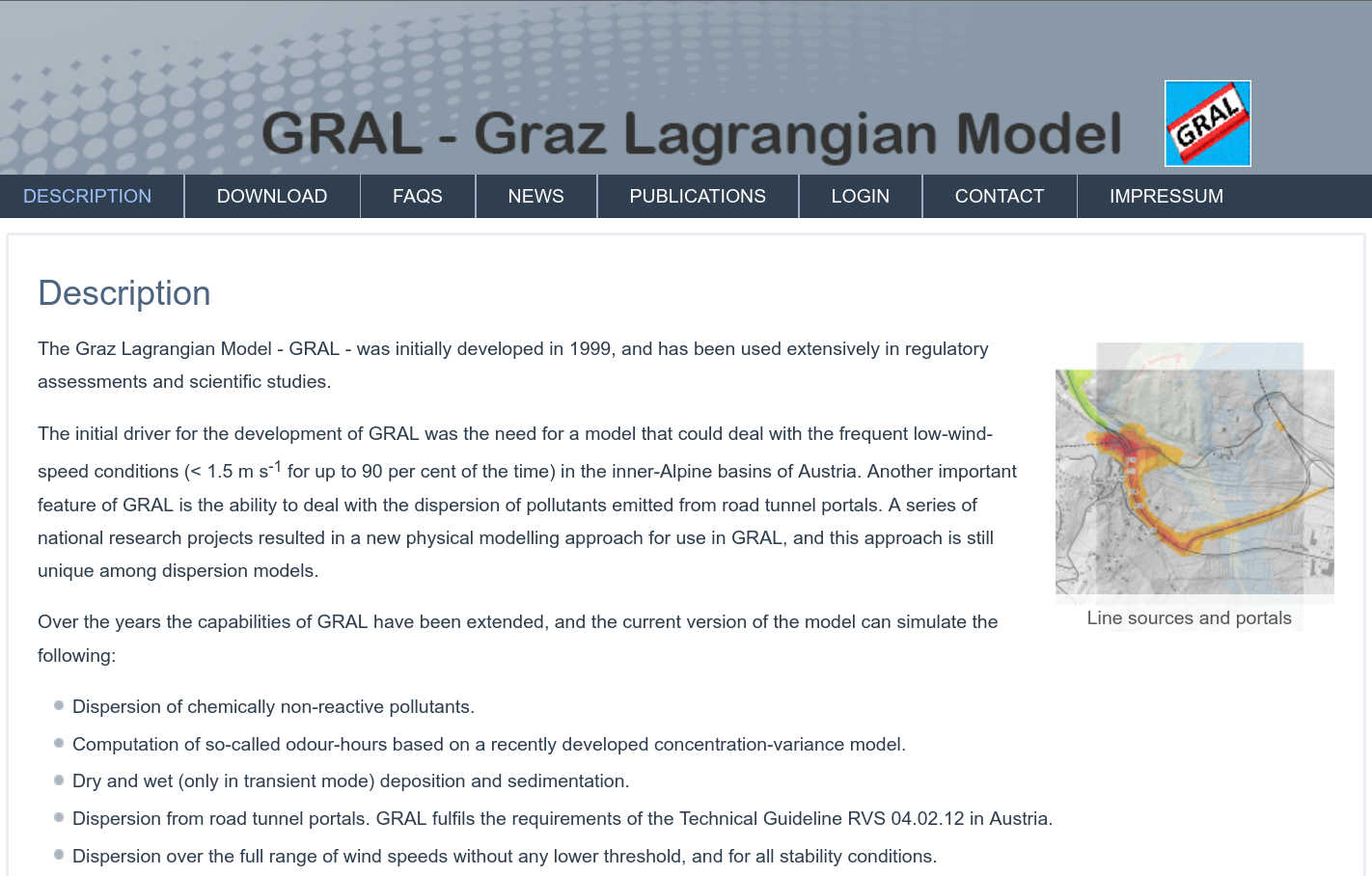
 The Graz Lagrangian (GRAL) system is a Lagrangian particle model with a free Graphic User Interface (GUI) available in both Linux and Windows. The last beta was published last November and now the developers have released the version 20.01. The software is now open source under a GPL-3.0 license, so everybody is welcomed to contribute to the project. The source code, has been published in github.
The Graz Lagrangian Model - GRAL - was initially developed in 1999, and has been used extensively in regulatory assessments and scientific studies. The initial driver for the development of GRAL was the need for a model that could deal with the frequent low-wind-speed conditions (< 1.5 m s-1 for up to 90 per cent of the time) in the inner-Alpine basins of Austria. According to the developers, there are around 600 users worldwide using, the GRAL/GRAMM system.
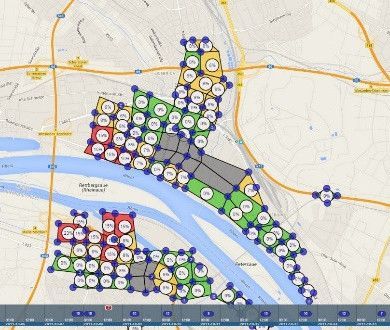 Environmental odour management today offers a variety of building blocks, ranging from the use of state-of-the-art technology to the implementation of various methods, which are based on national and international guidelines and standards. These range from odour monitoring approaches using trained human sensory panels and citizen science, real-time and forecasted dynamic dispersion modelling, trajectory and back-tracking calculations, but also sensor systems which are making use of gas sensors to detect and quantify key odorants of odour sources.
  CALPUFF Version 7.3.1 has been released. This version incorporates an agricultural spraying source type. In addition, several bugs were identified and fixed in Version 7.2.1 including issues with the use of multiple sub-hourly variable emissions files and processing missing layers in AERMET generated .PFL files. This model is out of the list of recommended models of the US EPA but it is the most appropriate under low wind/calm conditions that influence odour impact and with complex terrains.