 The 4th Graz Lagrangian Model - GRAL User Workshop will be held in Innsbruck, Austria, on 12 – 13 March 2019. This recent lagrangian model is offered with a free GUI available in both Linux and Windows and has a special module focused on odour dispersion modelling. The workshop aims at giving an overview about all new developments, and it offers a distinct possibility for an informal exchange with other users and their specific experiences.This workshop is free.
The Graz Lagrangian Model - GRAL - was initially developed in 1999, and has been used extensively in regulatory assessments and scientific studies. The initial driver for the development of GRAL was the need for a model that could deal with the frequent low-wind-speed conditions (< 1.5 m s-1 for up to 90 per cent of the time) in the inner-Alpine basins of Austria. Some papers have recently being presented that compares the use of the GRAMM/GRAL in some odour emitting facilities. This software is freeware, but the code is unfortunately closed.
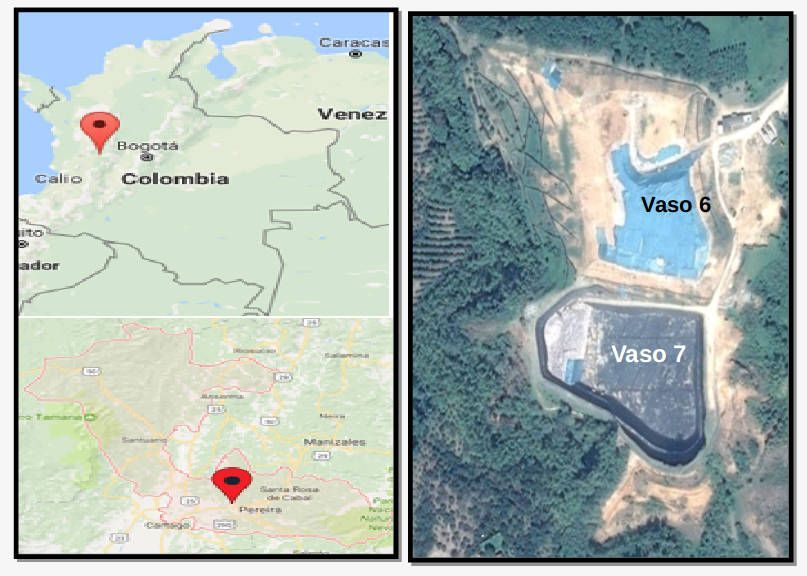 The sanitary landfill, located in the city of Pereira, Risaralda, Colombia, is operated by the company Atesa de Occidente S.A ESP, here the disposal of waste from department of Risaralda, some municipalities of Caldas and Norte del Valle del Cauda is carried out, it´s receiving 800 Tons/day, causing impacts to the environment by the emission of offensive gases and odors, causing problems to community.