There is no translation available.
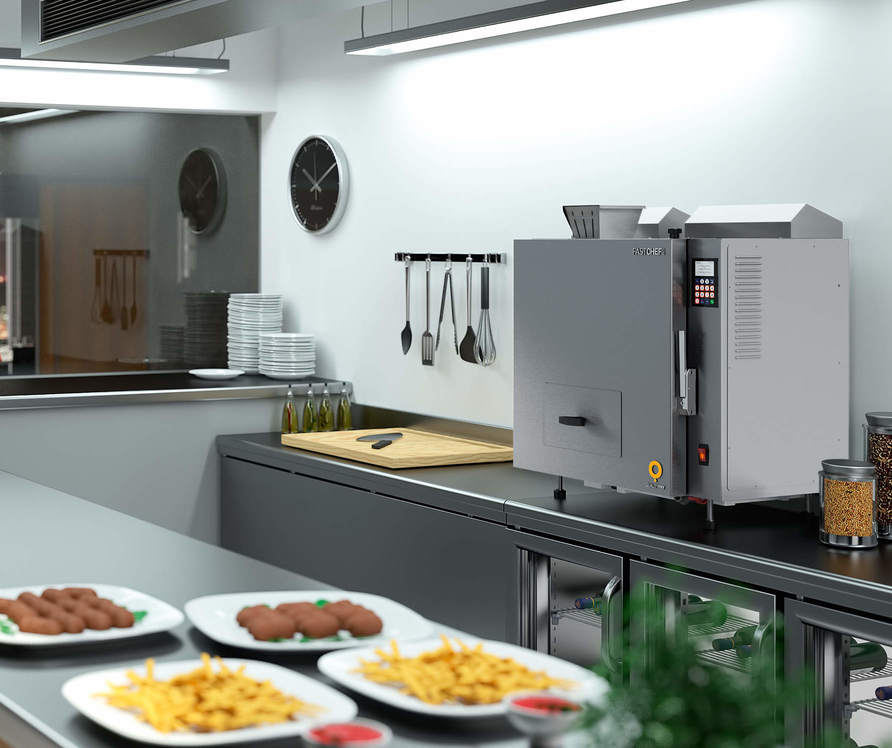 The company QualityFry has developed the first patented frier in the world that is able to tackle the odour emission from the process of deep frying. This way, there is no need of installation of stacks or ventilation systems for these processes. Deep frying is a source of odour emission, as odorants are easily carried out to the atmosphere at temperatures of 175-190 ºC. If the gases emitted during deep frying are not collected and treated adequately, they can be a source of odour complaints on communities nearby.
Restaurants are sometimes a source of odour complaints around the world, but unfortunately, here at olores.org we have not paid much attention to these activities, probably because we focus a bit more on the big scale of the odour impact of industrial activities. However, that does not mean that nothing is happening around the management of the odour impacts in restaurants. The company QualityFry has developed an interesting frier totally covered and with a controlled ventilation that is able to reduce de odour emission by passing the gases of oils, fats and food through an activated carbon filter.
 The Institute of Electrical and Electronics Engineers (IEEE) has launched an open call for experts to participate in a new standard for e-noses. The organization is asking for volunteers to contribute to this new standard that will have a strong focus on specific applications of these devices. The IEEE Sensors Council and the IEEE Industrial Electronics Society will sponsor the initial phases of this expanded standardization effort.
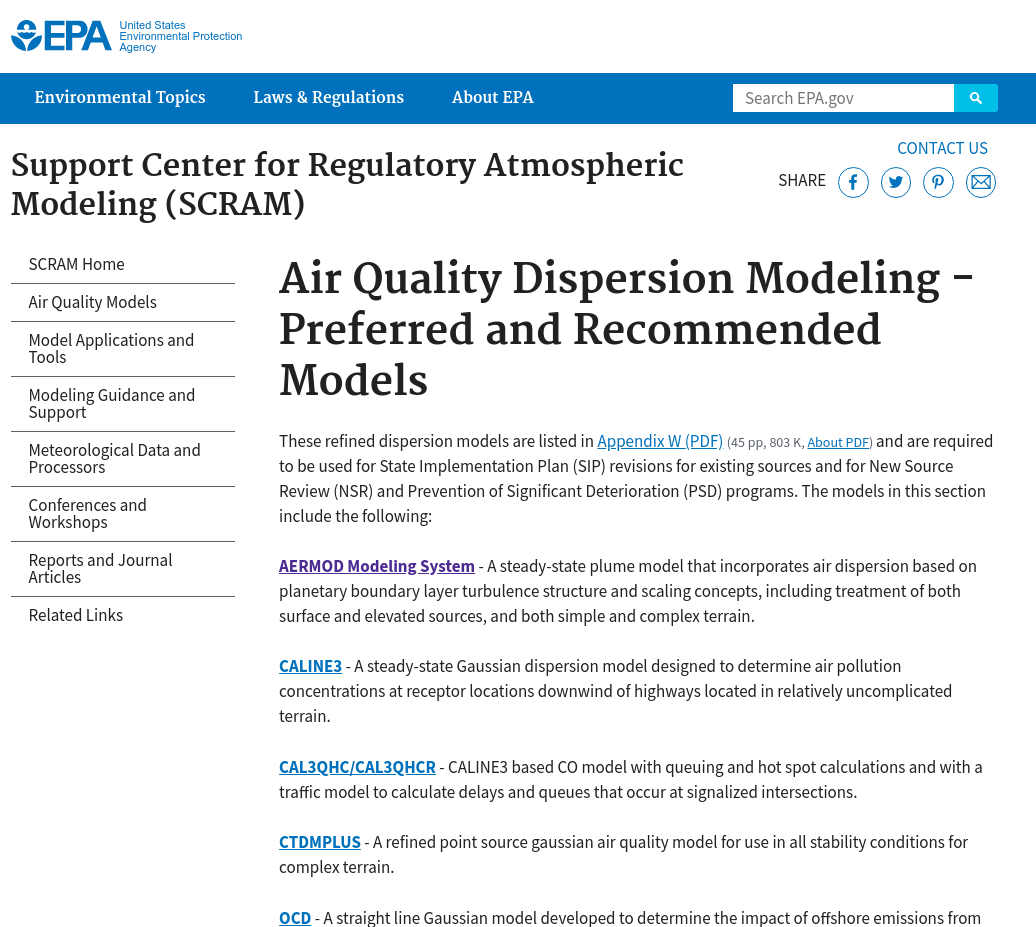 The website of the Support Center for Regulatory Atmospheric Modeling (SCRAM) no longer includes the CALPUFF model as a recommended dispersion model. This means that one of the most widely dispersion model used for odour modelling is not recommended by the US EPA any more. This decision has serious consequences for the odour community.