There is no translation available.
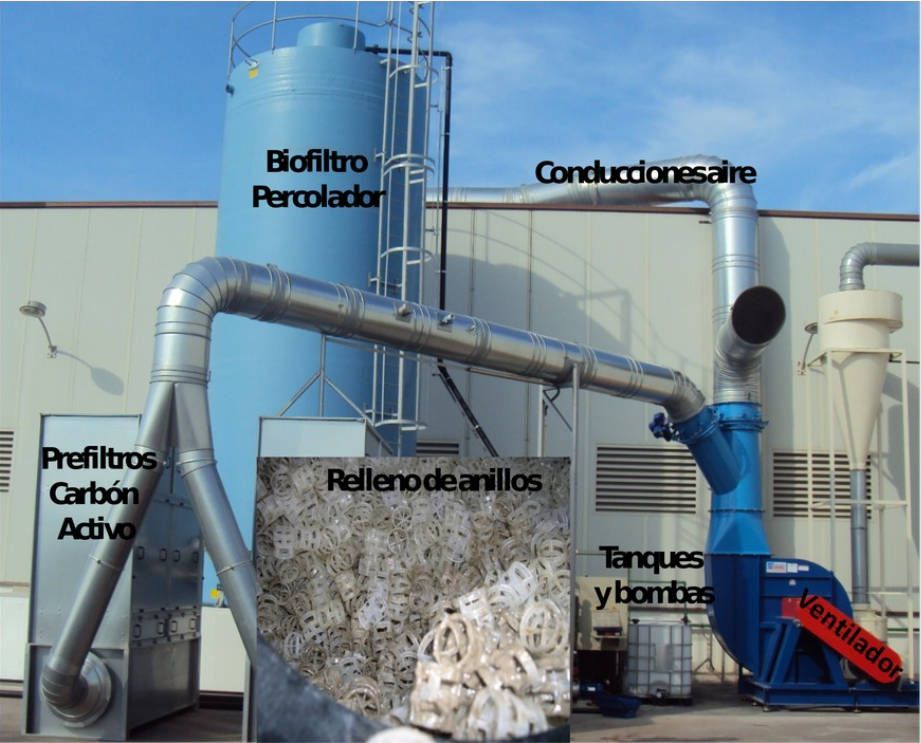 Emissions of volatile organic compounds (VOC) in several industrial sectors are regulated by increasingly restrictive policies, requiring the implementation of control treatments. In recent years, we have been working on the scaling of the biotrickling filter (VOCUSTM) for its industrial application, and there are several companies in Europe that already use this technology to control their emissions.
This work compiles the results of the cases of implantation of this technology in various industrial sectors, with VOC of very different nature, from the very soluble ones such as the flexographic industry, to the cases of elimination of styrene emitted in the composite industry and mixtures of soluble and hydrophobic compounds typical of furniture or automobile coating industries.
F. J. Álvarez-Hornos1, C. Lafita2, C. Gabaldón1, V. Martínez-Soria1*
1. Grupo GI2AM, Departamento de Ingeniería Química, Universitat de València. c/Universitat s/n, 46100 Burjassot, Valencia, Spain. * vmsoria@uv.es
2. Pure Air Solutions b.v., P.O. Box 135, 8440 AC, Heerenveen, The Netherlands.
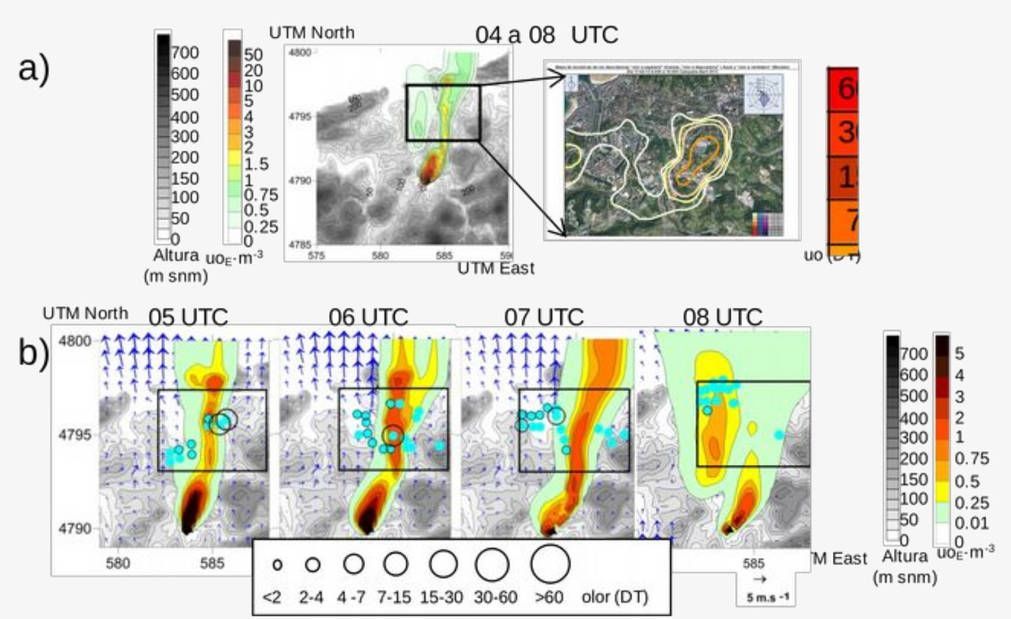 The RAMS-CALMET-CALPUFF modelling system has been used to simulate the odorous impacts from a paper-mill in an urban area located several kilometres away in a coastal mountainous area.
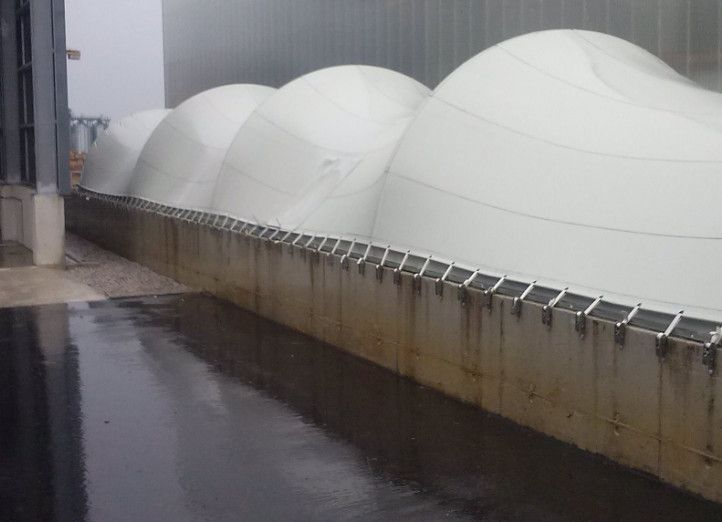 This report exposes the results obtained during the operational years of two plants where Advanced Biofiltration System (BAP) were installed to treat the odour emissions created during the process or from the sewage waters derived from this process.