There is no translation available.
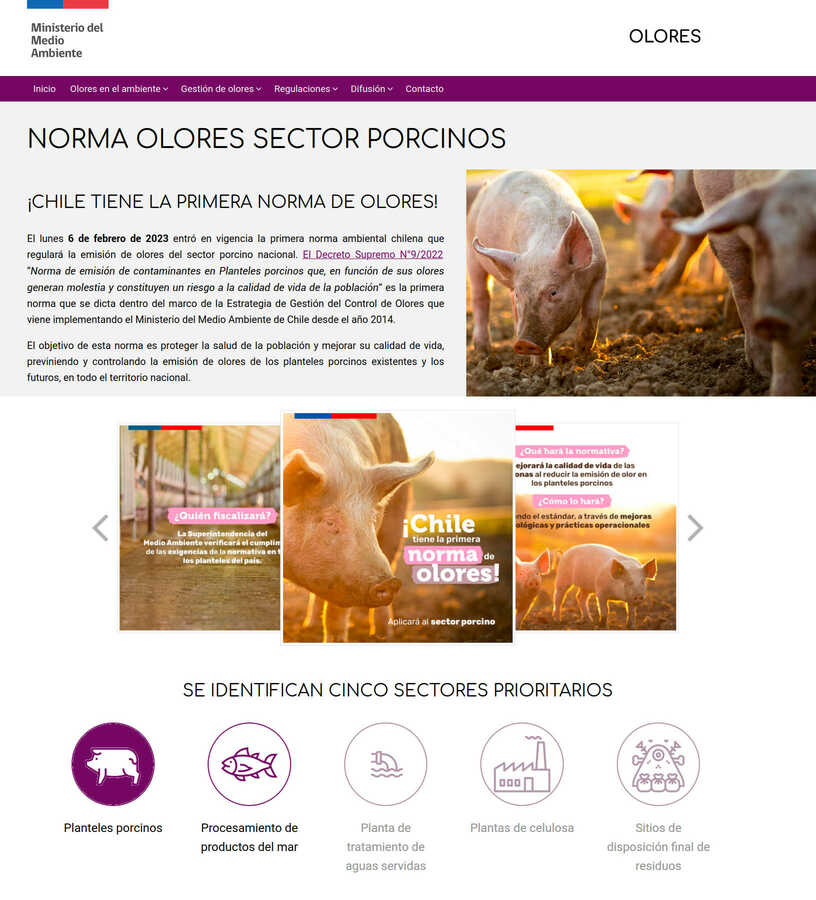
In January this year, the Ministry of the Environment of Chile submitted for public information the preliminary draft regulation on the emission of pollutants in fishmeal and fish oil plants and fish feed plants that, based on their odours, generate nuisance and constitute a risk to the quality of life of the population*. This would be the second odour regulation to be addressed in this country after the recent approval of the Law Regulating Odour Emission from the Pig Sector in February. But this is just one of the Ministry's many actions. In this post, we will review some initiatives being carried out by this organisation.
Chile, perhaps with the exception of Germany, may be the only country in the world working effectively on odour impact management at a regulatory level. The Chilean Ministry of Environment has set out to end the free exhaust policy and improve air quality concerning this environmental vector. But what is this country doing to improve air quality for its citizens?