There is no translation available.
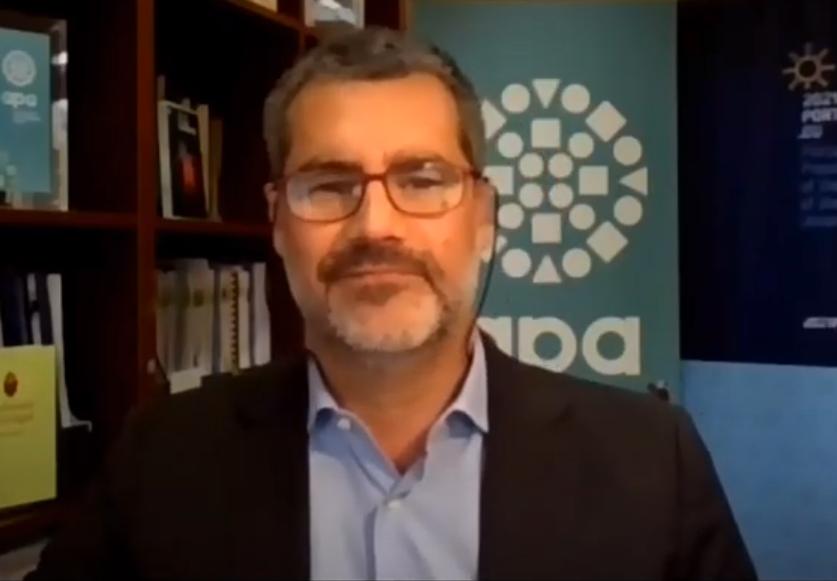 The last webinar on odour management organized by the APEA was very interesting. After all the presentations, Mr. Nuno Lacasta, president of the Portuguese Environment Agency (APA) announced that The Portuguese Environment Agency is now undertaking the preparation of a Guidance toolkit for odour management and control in Portugal.
According to Mr. Lacasta "This guideline will be based on activities risk assessment and corresponding management plans that identify odour mitigation measures adapting them to technical progress and also to citizen input." In addition he mentioned that they have drawn upon the experience of several European countries in a way that allows for this to be a path that they start to undertake in a comprehensive manner, in Portugal.
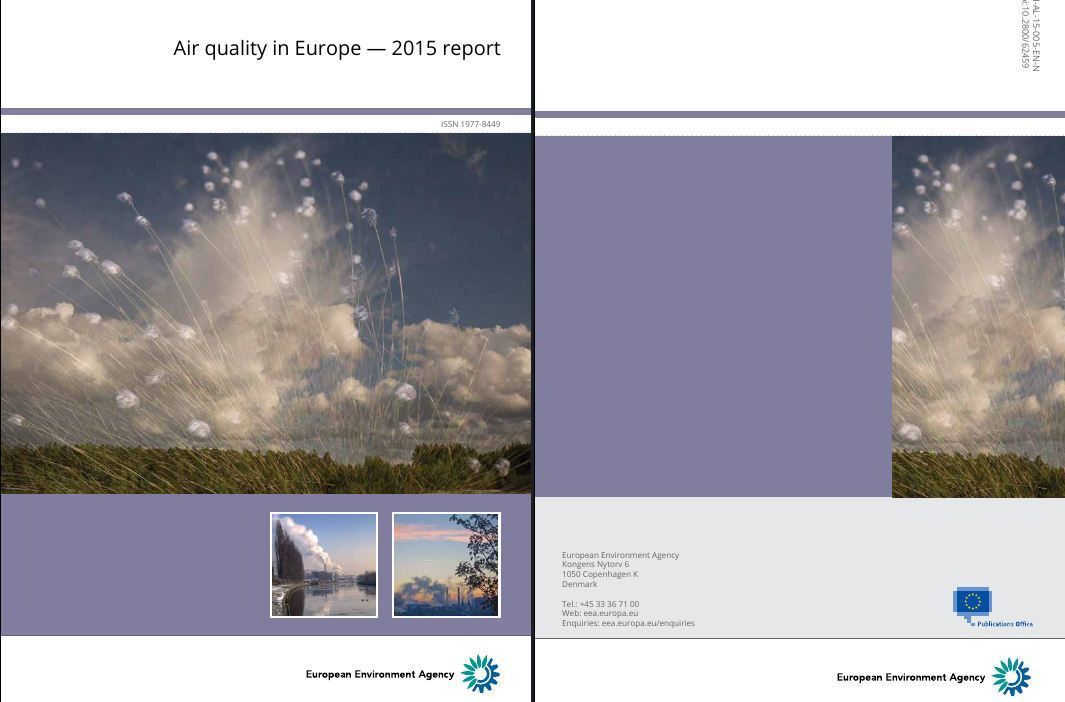 Every year, the Air quality in Europe (AQE) Report presents an updated overview and analysis of air quality in Europe. This year the AQE report edited by the
 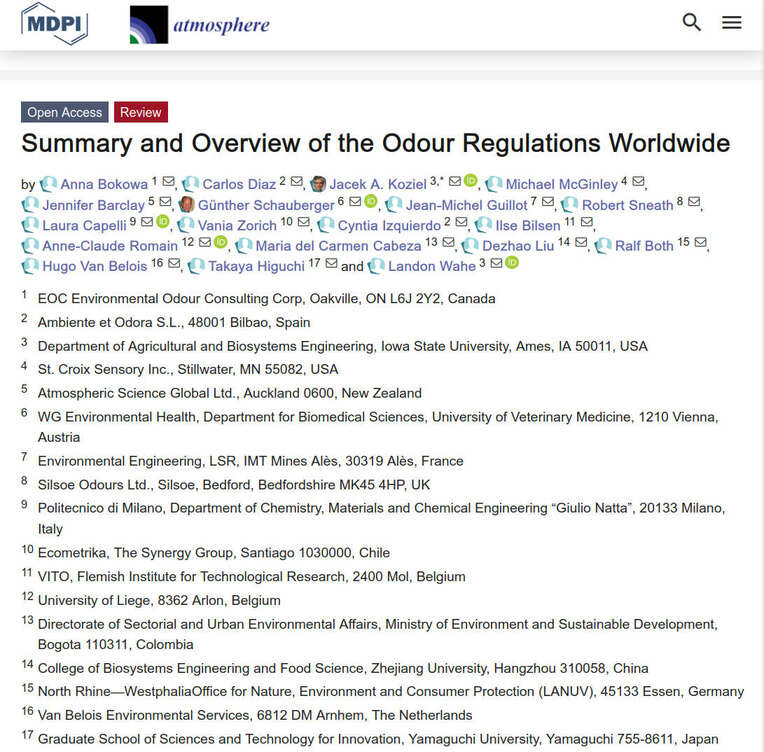 The well known media Atmosphere from MDPI has finally published the paper titled “Summary and Overview of the Odour Regulations Worldwide”, written by 18 authors from Canada, Spain, USA, Poland, New Zealand, Austria, France, UK, Italy, Chile, Belgium, Colombia, China, Germany, the Netherlands and Japan. This paper was commenced in early 2016, and the authors have had over 50 (virtual) meetings at different daylight zones along these 4 years of work.