Another year has come to an end, and once again, we bring you our summary of what’s happened in the world of odours during 2025. Each year, the number of posts we publish continues to grow, which makes it increasingly challenging to put together a summary that people will actually read to the end. Still, this moment is reserved for those of you who are truly passionate and eager to keep up with everything that’s been happening in the field of odours.
Before we dive into the review, there are two things I’d like to mention. First, the domain Olores.org was registered back in 2005—meaning we’ve now been sharing news and insights on odours for 20 years. Time really does fly! We’re all a little older and, hopefully, a little wiser. Our first monthly newsletter in English was sent 12 years ago, and we’re proud of how far we’ve come.
Secondly, we’d like to remind you that we are an odour consultancy company that one day decided to share our knowledge—and that of others—freely with the community. Occasionally, companies have sponsored this website as a token of appreciation, which we’ve always valued. However, it’s been quite some time since we last had a sponsor. We continue doing this purely out of passion, but as a for-profit company, Olores.org doesn’t generate income for us. If you’ve enjoyed our work over the years, please consider advertising with us to help support 20 years of dedication to the odour field. Thank you!
Now, let’s get started with our review of this year’s highlights.
In January we started informing about the opening of the call for contributions for the 11th VDI Conference, "Odours in the Environment,". The event took place on November 18-19, 2025, at the Wyndham Grand Salzburg Conference Centre in Salzburg, Austria, and it was a key gathering for odour management professionals from the German-speaking world. We will speak about this later.
The Italian National Environmental Protection Agency Network (SNPA) published updated guidelines titled "Emissioni Odorigene: Elementi di Riferimento e Approcci Metodologici per il Monitoraggio" (Odour Emissions: Reference Elements and Methodological Approaches for Monitoring). This technical document, approved in January 2025, replaced the 2018 framework.
In February we launched our first training course to become an auditor for our E&T&C certification. People from all five continents signed up (mostly friends), so we’re delighted to have this excellent pool of auditors ready to help testing the performance of industrial plants in Engagement, Transparency, and Communication!
This month, we published several presentations along with recordings from the ODORA24 conference we organised in Bilbao. They are, unfortunately, in Spanish, but if you understand a bit of the language just with a few duolingo lessons, you’ll find many interesting talks — we encourage you to check them all out here. Then switch the language to Spanish. By the way, the next conference, ODORA27, will be held in English as the main language.
In February, we announced a new initiative to elevate the Spanish standard UNE 77270:2023 – *Collaborative Odour Maps Construction through Citizen Science* – to an ISO or EN standard. Unfortunately, the initiative did not gain much traction, which is a pity, as the amount requested (€12,100) was quite modest. Maybe next time!
The last thing in February was the announcement of an online workshop on CALPUFF/CALMET air quality modelling via Teams, held on 22 May 2025. The event was organised by Mr David Lyder, Senior Air Modelling Standards Engineer at the Air Policy Section of the Government of Alberta, together with Mr Madhan Selvaraj, Mr Wally Qiu, and Mr Piotr Staniaszek. The aim was to gather feedback from the air quality modelling community. The event took place in May and was very successful, although unfortunately we have not been able to access the recordings.
In March, we informed about the publication in December 2024 of the European Commission’s new Best Available Techniques Reference Document for the Smitheries and Foundries Industry (SF BREF). This BREF sets out stringent guidelines aimed at reducing the environmental impact of foundries and smitheries across the European Union, with a particular emphasis on odour management and control.
We also reported on several initiatives planned by the Chilean Ministry of the Environment related to odour management in 2025. We will talk about these initiatives in more detail later in this review, but it’s interesting to look back at what was planned and see what was ultimately achieved during 2025. You’ll be amazed by this organisation’s ability to produce texts, regulations, and documents.
The Hessian Agency for Nature Conservation, Environment and Geology (HLNUG) announced in March its 2025 stack emission Proficiency Tests, offering olfactometric laboratories an opportunity to assess not only laboratory performance but also sampling uncertainty. This marks ten years of Proficiency Testing (PT)- Several papers have already been published on the topic, such as this one, but there are more to come. We have had access to the preprint, and the ideas drafted will challenge many of the preconceived notions that existed during the development of EN 13725. This European standard is currently being challenged by two completely independent German groups; this will be discussed in more detail later.
If the HLNUG celebrated ten years of proficiency tests, Olfasense marked twenty years by launching its 2025 proficiency test call, inviting olfactometric laboratories worldwide to take part. Many laboratories reported excellent results; however, since several claimed to be among the top performers—and there can only be a few—it suggests that something may not be entirely consistent. In our view, as a step towards greater transparency in the field of olfactometry, the results of such proficiency tests should be made publicly available, with the consent of the participating laboratories. Transparency is a nice thing.
In April, a large part of our team travelled to South America to take part in two wonderful events.
The city of Medellín, Colombia, hosted the First International Congress on Environmental Odour Management, organised by the Colombian Association of Sanitary and Environmental Engineering (ACODAL Noroccidente Branch) with support from Olores.org. The event brought together more than 310 professionals from academic, industrial, and environmental consulting sectors, exceeding attendance expectations. Alongside the conference, the business fair featured 15 specialised companies showcasing innovative technologies for odour measurement, control, and mitigation, including continuous monitoring systems and bioremediation solutions.
A week later, we travelled to Santiago, Chile, for the International Congress on Odour Management in the Environment, OLORES25, held on 9 and 10 April 2025. The congress was a resounding success, establishing itself as a benchmark event in the field of odour management, measurement, and control. Organised by the AMIGO Association and the Olores.org portal, it brought together 250 professionals from Europe, the USA, Canada, and Latin America, including experts from the public, private, and academic sectors who shared their experiences, research, and technological innovations.
In April, we launched the first call for content for a pioneering 24-hour online marathon on odour management (24h-MOM). The event was designed to bring together experts from around the world through an innovative format: it began in Australia and New Zealand and then rotated sequentially through Asia, Europe, Latin America, and North America. We will talk about this with more details later in this text too.
The FAST (Federazione Italiana delle Associazioni Scientifiche e Tecniche) organised at the end of May an online training course titled “Odour Emissions: Regulatory, Legal, Technical, and Methodological Aspects. Practical Case Studies.” The course took place over four webinar sessions and was aimed at professionals dealing with environmental impact issues related to odour emissions. The sessions was held online, in Italian, and included expert presentations, interactive discussions, and case-based learning.
The final call for abstract submissions for the 2025 Air and Odour Monitoring Conference and Trade Show, hosted by the company Scentroid, was open in May. This event took place on October 8 and 9, 2025, at the University of Toronto. The conference theme was "AIr Tomorrow: Advancing AI for Cleaner Air,". By having a look to the presenters, I am afraid there were not many odour discussions at that conference. Still, a few of the talks look very interesting for odour managers.
InterCinD, the division of the Italian company Lab Service dedicated to interlaboratory testing, announced in May the organisation of its annual Proficiency Test (PT) for Olfactometry, in accordance with the latest EN 13725:2022 standard. All olfactometric laboratories, both European and non-European, were invited to take part in the 2025 edition to confirm compliance with the required performance criteria.
Also in May, the GRAL version 24.11 was released, bringing important bug fixes, enhanced visualisations, and new features that improved the overall user experience. This update addressed issues in odour percentile calculations and source group management, introduced expanded export options, and changed the installation process to offer greater flexibility. The software remains open source, with its full code available on GitHub for those interested in exploring it further.
The Clean Air Society of Australia and New Zealand (CASANZ) organised from 27 May to 4 June 2025 its online course Odour – An Introduction. This foundational online programme was designed for anyone eager to gain a thorough understanding of odour science, management, and regulation.
In June, we announced the cancellation of the international conference ODORA25, which had been scheduled to take place on 16–17 September 2025 in Bilbao, Spain. Although we reached out to several potential sponsors and made every effort to secure funding, we were ultimately unable to make the event happen this time. It was disappointing, especially after the time and resources invested, but we remain enthusiastic and confident about the future and we look forward to bringing everyone together again for ODORA27 in 2027.
Working Group 41 of CEN convened in Paris (and online) on 16 June 2025, with the main objective of addressing comments on the drafts of Parts 1 and 2 of the standard for Instrumental Odour Monitoring Systems (IOMS). Part 1 covers definitions and general aspects, Part 2 addresses technical specifications and QA/QC requirements, and Part 3 focuses on field validation. The group met again in September in Madrid, marking the final meeting in the first series of sessions aimed at delivering a draft to Technical Committee 264 on Air Quality of the European Committee for Standardisation. A presentation of the draft will be made to Technical Committee 264 on 22 January 2026.
In June, we also learned that Australia had adopted the EN 13725:2022 standard for odour measurement without any modifications to the text. This new AS EN 13725:2025 replaced the previous AS/NZS 4323.3:2001, with the change in prefix indicating that the update applied to Australia but not to New Zealand. The transposition of a standard means adopting it verbatim, ensuring that all users follow exactly the same method. Even a small alteration, such as a comma, can change the procedure and its results.
The Institute of Air Quality Management (IAQM) is a UK organisation that announced in June an open consultation period for its newly developed guidance, "Good Practice on Air Quality Monitoring for Brownfield Projects." This document was collaboratively created by a dedicated cross-sector working group, comprising members from the IAQM itself and the IES Land Condition Community. After publication of this draf, the team addressed several comments and the final version was finally published in October.
Also in June, China introduced the new environmental standard HJ 1416-2025 for the determination of odour concentration and emission rate by dynamic olfactometry. This standard was published on June 6, 2025, but is set to be in force on January 1, 2026.
The webcast “Tools and Techniques for Precise Odor Assessment,” organised by the Water Environment Federation (WEF) in July, brought together professionals to discuss current practices in managing odour complaints and identifying effective control strategies. Attracting over 340 registrants and 181 online attendees, the event featured presentations from experts in both field and laboratory contexts. The session recording is still available free of charge for those interested in odour impact management.
Also in July, the Inter-American Association of Sanitary and Environmental Engineering (AIDIS) organised a seminar titled “Regional Regulations and Initiatives on Odours”. The seminar brought together public administration experts from Colombia, Chile, Uruguay, and Argentina, reflecting a multinational effort to address odour pollution. The seminar is still available for viewing upon payment of a small fee, so if you’re interested in odour management and understand a bit of Spanish, it’s definitely worth watching — if only to support the organisation financially.
The draft of the German standard VDI 3940 Part 6:2025-07 was published in July. This text addresses the determination of disgusting and nauseating odours. This standard is currently in draft stage, accepting comments from interested parties.
In September, a workshop titled “Chemical Sensing: From the Lab to the Field” was held in Hakodate, Japan, focusing on the latest advances in chemical sensor technology, including electronic noses and their applications in odour management. The workshop was organised by the highly active International Society for Olfaction and Chemical Sensing (ISOCS) and featured a panel of international experts. This organisation is also preparing the next International Symposium on Olfaction and Electronic Nose (ISOEN 2026), which will take place from 17 to 20 May 2026 in Chongqing, China. Paper submissions close on 5 January 2026, by the way.
Also in September, the Air & Waste Management Association (A&WMA) announced its second specialty conference on odor science, scheduled for May 12-14, 2026. The event will be held at the Radisson Blu Mall of America in Bloomington, Minnesota. This conference will cover a broad spectrum of odor-related topics including odor science, chemical forensics and source identification, field assessment and electronic sensing methods, odor sampling techniques, odor policy and regulation, modeling, control and mitigation strategies, as well as community impacts and best practices.
The final programme/program for the 24-Hour Marathon on Odour/Odor Management (24h-MOM) was also published in September. More than 50 presentations from five continents were the result of this tremendous collaborative effort. Over 500 people registered to attend this successful event. The first edition of the 24-hour Odor Management Marathon (24h-MOM) successfully concluded on November 12, 2025, uniting experts from all five continents in an innovative virtual format that rotated sequentially through Oceania, Asia, Europe, South America, and North America.
The event, organiz/sed by the global organiz/sations CASANZ, A&WMA, AMIGO, JAOE, WEF, IEEE, ISOCS, DOS, IWA, KLOPC, AIDIC, and VDI, and the coordination of olores.org addressed more than 10 key topics through presentations and roundtables, fostering the exchange of scientific, regulatory, and technological advances in odor/odour management.
We hope to publish the presentations soon on our YouTube channel.
In October, a new edition of the well-known NOSE2026 International Conference on Environmental Monitoring of Odours and VOCs organised by AIDIC (Italian Association of Chemical Engineering) was announced. The event will take place from 6 to 8 July 2026 in Bologna, Italy. This event is the 10th edition of the conference series and presents a key opportunity for industrial and academic experts globally to exchange the latest advances, technologies, and research in odour and volatile organic compounds monitoring and control.
The German standard for calculating uncertainty in odour measurements—VDI-EE 3884 Part 1.1 was actually published in October 2024. That is last year. However we did present it in October of this year. A comprehensive proficiency test was run in Germany across twelve accredited labs, comparing various standards for uncertainty, including the EN 13725:2022 method, the long-standing VDI 3884 method, and ISO 20988 methodologies (A6 and A7). The results of this study revealed that inclusion of the n-butanol bias neither improved accuracy nor reflected measurable reality for environmental samples. Expanded uncertainties calculated by the EN 13725:2022 method were not only higher on average (up to 3.8 dBod) but also non-symmetric, sometimes with positive lower confidence limits—contradicting the fundamentals of measurement science.
The kick-off meeting for drawing up the Best Available Techniques REFerence document for Landfills (LAN BREF) took place as a hybrid event from 6 to 9 October 2025, gathering 166 experts—82 in person and 84 online—representing EU Member States, Norway, industry, environmental NGOs, the European Chemicals Agency (ECHA), and European Commission services. This meeting launched the process of developing a standalone BAT reference document specifically for landfills, reflecting their importance and complexity within waste management.
In Ipswich, Queensland, Australia, residents have for some time reported persistent odours originating from nearby industrial and waste facilities in Swanbank and New Chum. These odours have caused discomfort and concern within the community, with some residents attributing health issues such as respiratory problems and nausea to the pollution. To address these concerns, a Public Health Inquiry was launched by the government to investigate the impact of these odours on community health. In November, the final report of the Swanbank Public Health Inquiry was published.
The 11th Conference “Odours in the Environment,” organized by the German Association of Engineers (VDI) held on November 18-19, 2025, at the Wyndham Grand Salzburg Conference Centre in Salzburg, Austria, was a successful event. The presentations were of excellent quality, covering a wide range of topics such as odour dispersion modelling, odour emission and ambient air measurements, legal aspects, and practical case studies. The conference featured engaging keynote lectures, workshops, and discussions that attracted experts and professionals from the odour management field. There was a special session dealing with dispersion modelling. We are planning to do a follow up on that session, hopefully for next June 2026.
The journal Atmosphere invited in November to researchers to contribute to the 2nd edition of the special issue "Environmental Odour," focusing on odour emissions, dispersion, measurement, modelling, and impact assessment across sectors like waste management, agriculture, and industry. The submission deadline has been extended to May 11, 2026, providing plenty of time for authors to prepare high-quality manuscripts. Full details, including scope and submission guidelines, are available on the special issue webpage.
In November, Olfasense GmbH announced its annual Odour Workshop on Product & Material Testing at their laboratory facilities in Kiel, Germany. This event targets sectors involved in odour evaluation, offering presentations by specialists, hands-on lab sessions on sensory and molecular techniques, and one-on-one discussions.
On 2 December, officially designated as “Odour Day” by AMIGO — the Ministry of the Environment of Chile published the amendment to the existing regulation on total reduced sulphurs (TRS) for pulp mills. On the same day, a seminar was held both online and onsite in Santiago, Chile, featuring representatives from various agencies related to the environment, health, and wastewater management. Continuing this momentum, just a few days later the same Ministry published a new odour regulation for fish rendering, fish oil, and fish feed plants. We currently have only a press release, but we hope to provide more detailed coverage in the future.
A new version of the UK H4 Odour Guidance was published on 3 December, introducing several changes compared with the previous version. The original H4 document (now withdrawn) provided detailed technical guidance, including benchmarked odour assessment methods, structured testing, and recommended modelling practices. The first H4 Horizontal Guidance for Odour was published in 2002 and included the first odour limits set in the UK. In 2009, this guidance was updated, although the odour limits based on the 98th percentile remained unchanged. Sixteen years later, the Environment Agency has concluded that the H4 format is outdated and has replaced it with a new online guidance, which is shorter (no PDF available) and more principles‑based. The odour limits have been removed from the text.
And last, but not least, the Clean Air Society of Australia and New Zealand (CASANZ) announced in December the organisation of the 2026 Odour and Air Quality conference, accessible at https://tsevents-2026-casanz-conference.eventsair.site, bringing together experts in air quality and odour control from around the world.
And that wraps up our summary of 2025! We hope you’ve enjoyed reading it as much as we’ve enjoyed putting it together. If you’d like to stay up to date with developments in odour management, remember — the best way is to subscribe to our monthly newsletter.
We wish you all the very best for the year ahead, 2026. During this festive season, take some time to relax and enjoy meaningful moments with your loved ones. Set odour management aside for a few days and focus on those who truly matter. You’ll return refreshed, re-energised, and ready to start 2026 with renewed enthusiasm. Cheers!
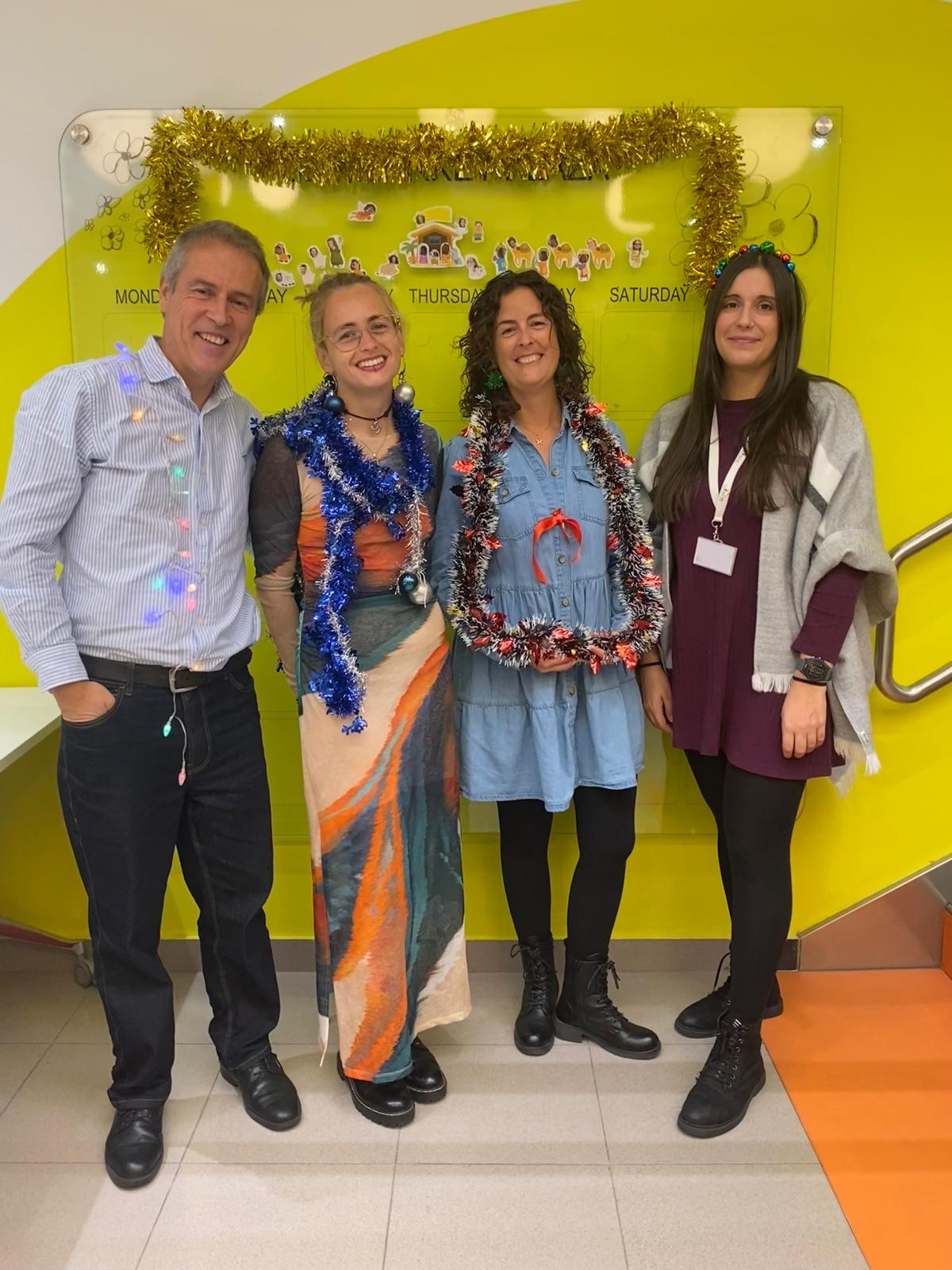
Ambiente et Odora team
If you find this article interesting, you might be also interested in these articles:
- What happened in the odour management world in 2024
- What happened in the odour management world in 2023
- What happened in the odour management world in 2022
- What happened in the odour management world in 2021
- What happened in 2020 in the odour management world