There is no translation available.
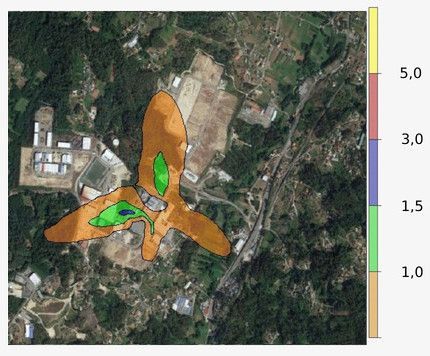 The technical recommendations in the design of stacks indicate that the emission at higher height, or a greater exhaust speed gases, decreases the impact in the surroundings. In fact, it is usual increases stack height in problematic sources.
Taking into account this principle, additional propulsion systems for conducted sources have been designed. This type of technology allows to power the exhaust gases at a high speed, diluting simultaneously with a high flow rate, and minimizing the impact on the environment.
A. Amo, R. Cerdá, M.A. Cid, J.V. Martínez
Labaqua S.A. Alicante, Spain.
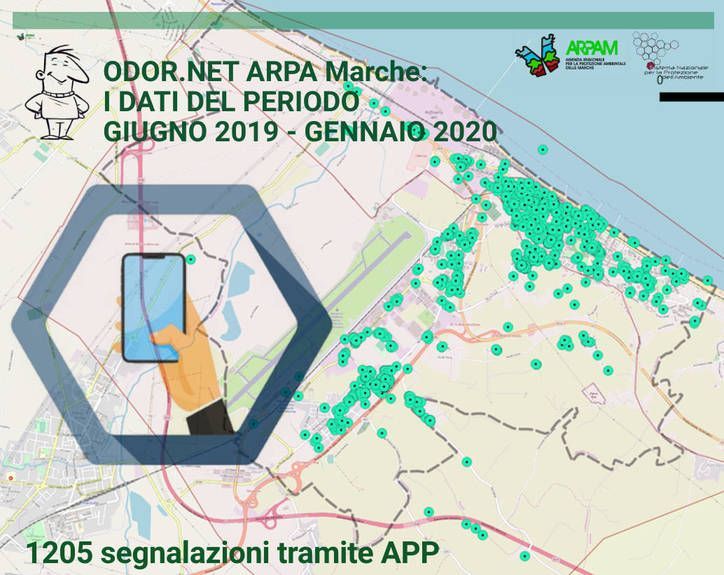 Odor.Net is a real-time monitoring project of olfactory nuisance in the city of Falconara, Italy, launched by ARPA Marche last June, carried out through the use of a simple APP for smartphones and tablets. After 7 months of work, some preliminary results have been presented.
 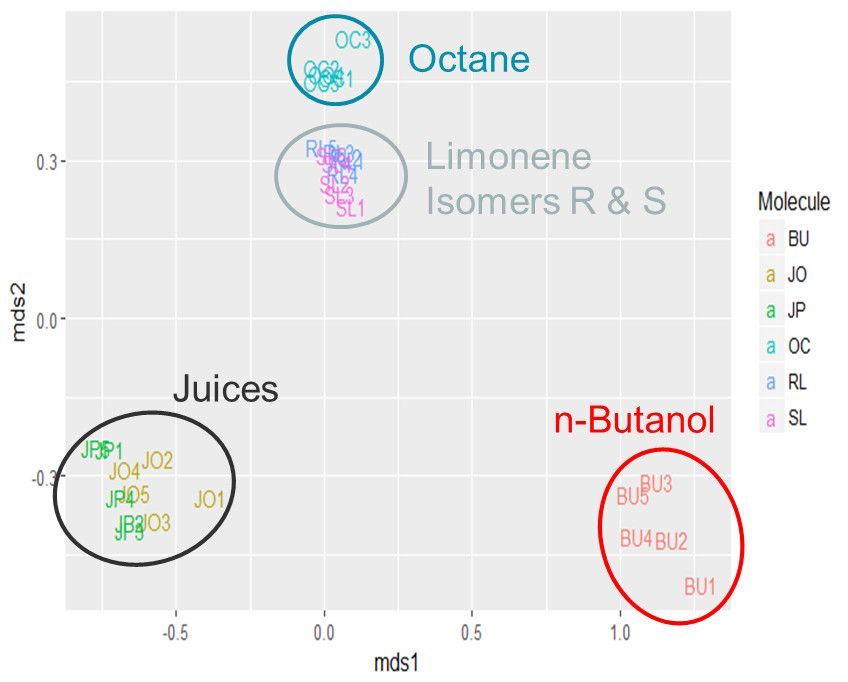 A device developed by Aryballe Technologies (Grenoble – France) and based on Surface Plasmon Resonance (SPR) imaging was used to measure odorous compounds. One advantages of such a device is to propose a large number of receptors inside the measurement cell.