There is no translation available.
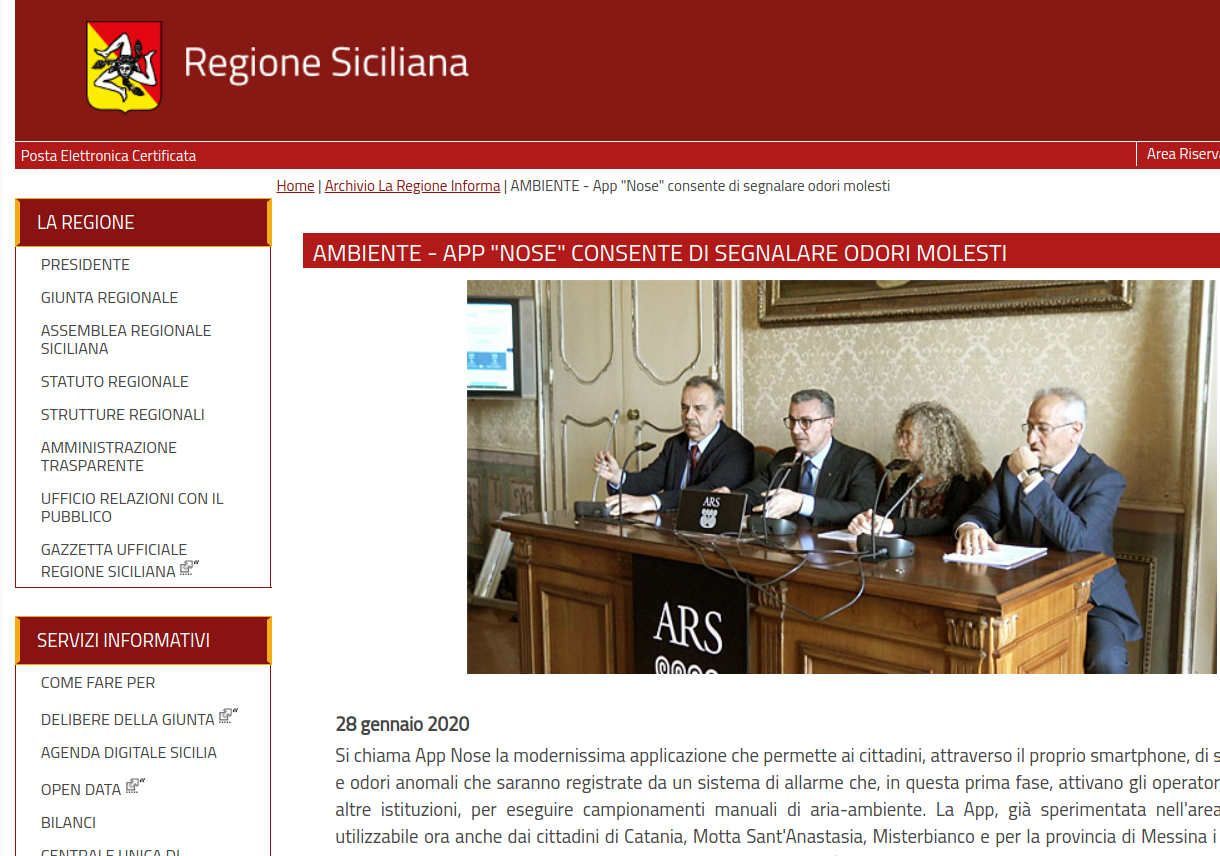 The Web-App NOSE is a free application that allows citizens to send their geo-referenced and real-time reports about odour episodes in a confidential and anonymous way to the Regional Environmental Ministry of Sicily. Mr Cordaro and Anna Abita from the Regional Environmental Ministry of Environment of Sicily and Paolo Bonasoni from the Institute of Atmospheric Science and Climate (ISAC) of Italy presented last week the preliminary results of a 2-year study on odour mapping funded by the Sicilian Region and co-financed by the ISAC.
This study commenced at the end of August 2019 in the area of Syracuse and In 4 months, 3200 odour observations have been collected from 2000 registered citizens. 2400 times the citizens have reported the smell of hydrocarbons, 271 times they reported sulfurs and 180 times they smelled solvents. Regarding intensity, 1500 reports recorded a maximum level intensity (5) and 1100 observations registered an intensity of 4. Finally, this app offers the possibility to register a health issue. In this sense, 1500 participants reported difficulty breathing, 1300 burning and irritation in the throat and 1100 headache.
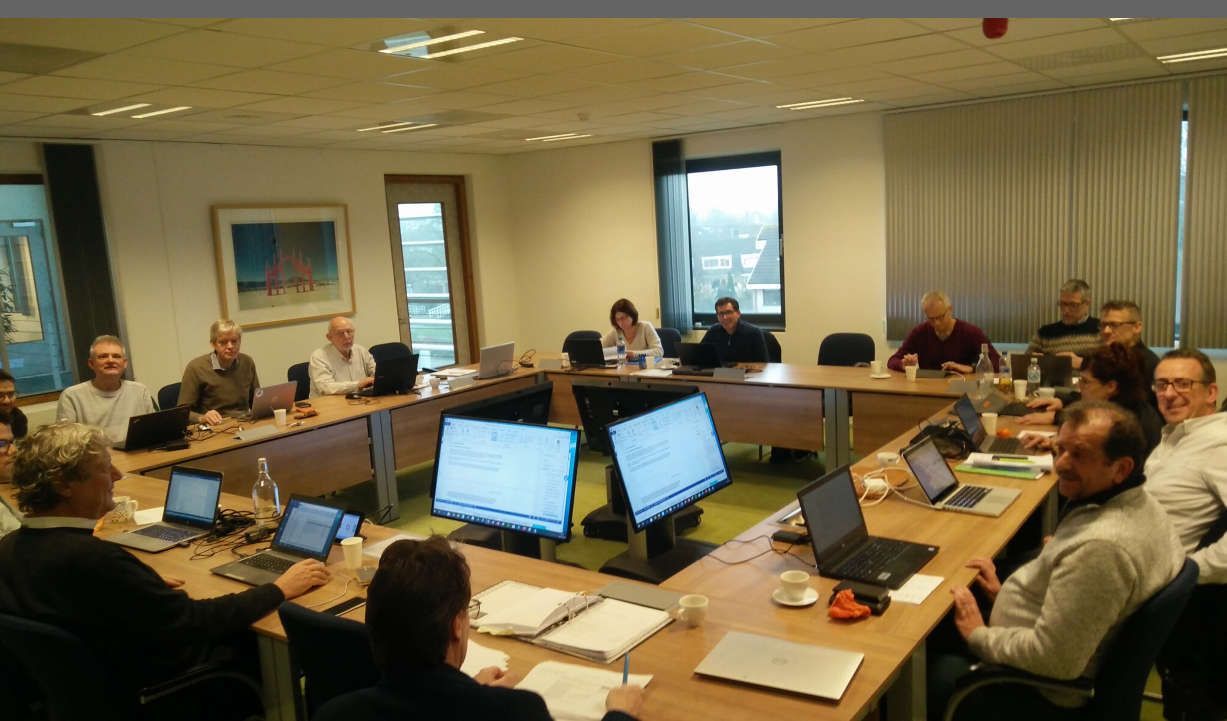 2020 is here and, once again, Working Group 2 of the CEN Technical Committee 264 got to meet in Delft (The Netherlands) the 21st and 22nd of January to discuss the coming revision of the EN 13725. The
 The Graz Lagrangian (GRAL) system is a Lagrangian particle model with a free Graphic User Interface (GUI) available in both Linux and Windows. The last beta was published