There is no translation available.
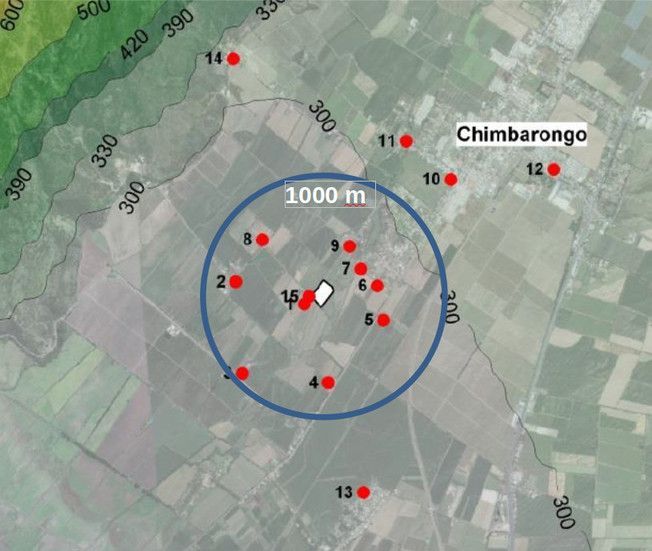 One way to assess odour nuisance is to apply a survey to the area of influence of an activity that potentially impacts the surrounding community. Repeated surveys were carried out in neighbours of the waste water treatment plant at Chimbarongo, Chile, during the years 2017 and 2018, using the VDI3883/1 model questionnaire.
In parallel, an odour impact measurement was carried out by means of field inspection, using a simplified methodology of VDI3940/1. Odour hour frequencies were generally determined well below the German regulatory threshold of 10%, which was also supported by ex-ante odour dispersion modeling.
G. Schleenstein
ECOTEC INGENIERIA SPA, Santiago, Chile
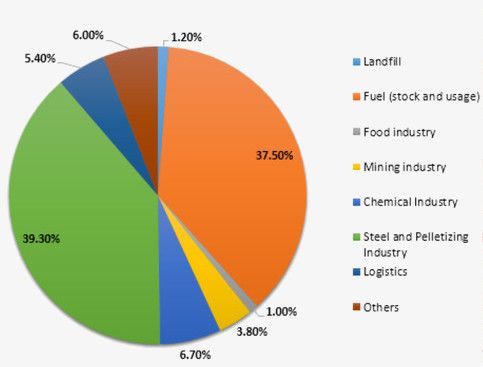
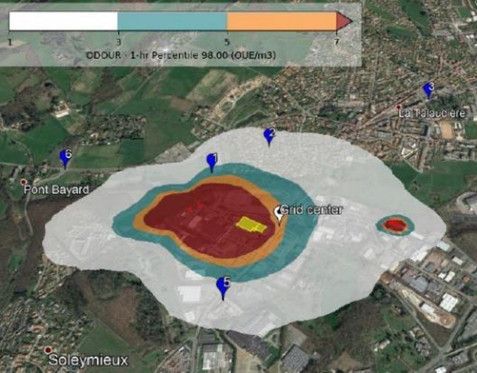 Molina’s industrial area, located in La Talaudiere, (France), has been generated a potential conflict at the residential area located in the surroundings, due to the industrial activity. An odour impact assessment study, managed by the Departmental Direction of Population Protection of La Loire (DDPP), was developed in 2 main areas (1) principal sources identified at the industrial area (2) headspace ambient air at collectors and discharge to sewage networks public system. Results show odour concentration according to EN13725 and Calpuff modelling impact assessment.