There is no translation available.
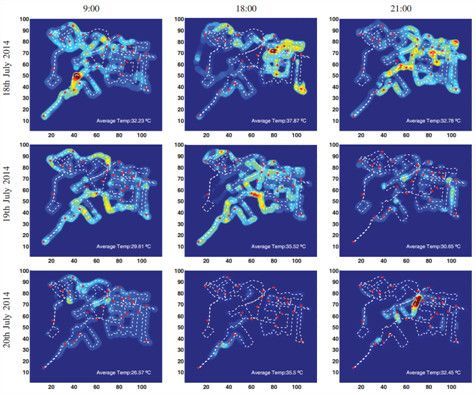 The SulfSCAN project presented in this article proposes a new approach to obtaining concentration maps by deploying a network of low cost olfactory sensors, and the development of atmospheric modeling tools to estimate the dispersion of odors in real time.
C. Palacios1, J. G. Monroy2, J. Gonzalez-Jimenez2, J. Olalla3 and Antonio J. Moyano1
1. Empresa Municipal de Aguas de Málaga S.A. (EMASA), Málaga. CPM@emasa.es
2. Departamento de Ingeniería de Sistemas y Automática, Universidad de Málaga.
3. European Management Consulting, grupo Top-Digital, Málaga.
 Biofiltration is the most widely used technique for eliminating odours in waste treatment plants (WTP). Volatile organic compounds (VOCs) are among the odorous compounds emitted by WTP, and serve as variables to measure odour emissions depending on the type of aeration process used.
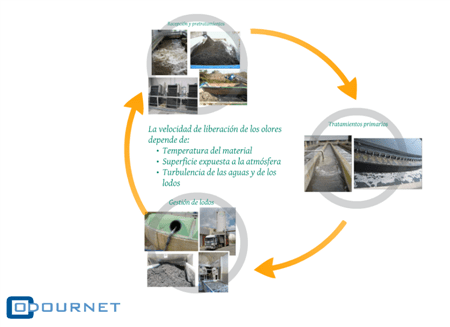 Odour generation is an inherent side product of waste water storage and treatment. Encroachment of developments in the proximity of sewage treatment works increases the risk of adverse odour impact on receptors.